Last updated 2026-07-11
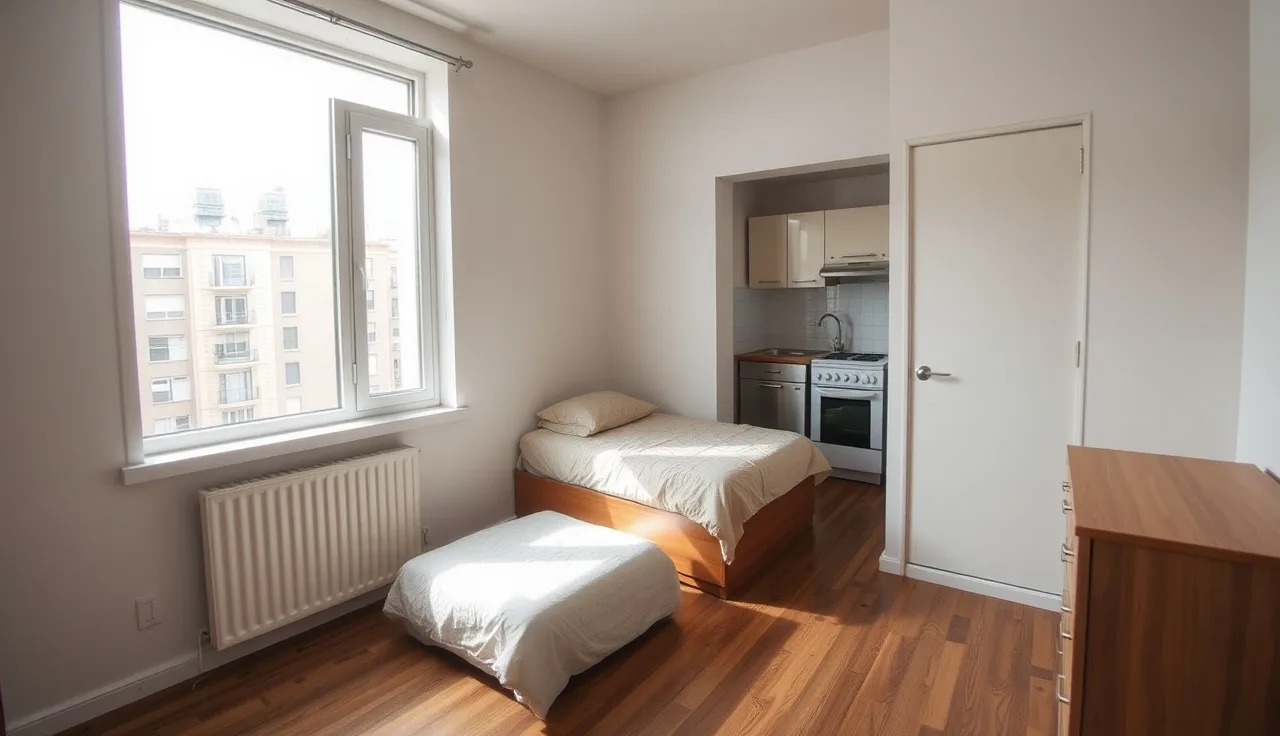
TL;DR
Yes, a studio apartment can pass a Section 8 Housing Quality Standards inspection for a single occupant. HUD sets no minimum square footage. The unit just has to clear all 13 HQS categories covering sanitation, safety, heating, and basic amenities. Clear every category and the studio gets approved. Size is almost never the reason a studio fails.
What does HUD actually require for a unit to pass a Section 8 inspection?
HUD's Housing Quality Standards, codified at 24 CFR Part 982 Subpart I, are the floor every housing choice voucher program unit has to clear before a Housing Assistance Payment contract starts [1]. The standards cover 13 performance categories: sanitary facilities, food preparation and refuse disposal, space and security, thermal environment, illumination and electricity, structure and materials, interior air quality, water supply, lead-based paint, access, site and neighborhood, sanitary conditions, and smoke detectors [1].
Notice what's missing from that list. A minimum square footage. HUD's HQS name no floor-area threshold at all. Not 400 square feet, not 250, not anything. The space requirement is qualitative. 24 CFR § 982.401(d) says the unit must have "at least one bedroom or living/sleeping room for each two persons," and it must provide "adequate space and security for the family" [1].
For one person, one living/sleeping room does the job. A studio by definition has one combined living-and-sleeping area, which satisfies the occupancy standard for a single occupant. Your local housing authority can add rules on top of the HUD minimum, so confirm with your PHA. But the federal floor is not the obstacle people expect it to be.
A PHA-employed or PHA-contracted inspector runs the inspection using HUD Form 52580 (or the equivalent HQS checklist). Each item gets marked Pass, Fail, or Inconclusive. One Fail on a life-threatening item blocks approval until the landlord fixes it. Non-life-threatening fails come with a repair window, often 30 days, before re-inspection [2].
Is there a minimum square footage for a Section 8 studio?
No. No federal minimum square footage applies to Section 8 units under HQS [1]. This trips people up, because some local building codes and some PHAs do set minimum room sizes. Those are separate rules that live outside HUD's standards.
A handful of PHAs write their own administrative policies that go beyond the HUD minimum. Some large urban PHAs require at least 150 square feet for a sleeping/living room, or bar studio approval for more than one person. Those are PHA-level rules, not HUD rules. Call your specific PHA and ask whether they set a local size standard, because the answer changes city by city.
HUD's HQS Inspection Checklist (Form 52580-A) asks the inspector to confirm the living/sleeping room is "of adequate size for the family" [2]. For one person in a studio, most PHAs read that as a simple test: does the room fit a bed and leave floor space to move around? That's the inspector's judgment call, and in practice a 250-to-300-square-foot studio clears it for a single occupant almost every time.
If you're shopping for a studio with a voucher, the local payment standard for a zero-bedroom or one-bedroom unit matters more than square footage. A unit can be tiny and still pass. The real question is whether the rent plus utilities lands inside your PHA's payment standard.
What are the most common reasons a studio fails a Section 8 inspection?
Square footage almost never sinks a studio. These are the items that actually kill approvals.
Smoke and carbon monoxide detectors. HUD has required working smoke detectors in HQS units for decades, and HUD Notice PIH 2022-01 added carbon monoxide alarm requirements for units with fuel-burning appliances or attached garages, following the 2021 HOTMA implementation [3]. Missing or dead-battery detectors are the single most common HQS failure nationally.
Electrical hazards. Exposed wiring, missing outlet covers, double-tapped breakers, and extension cords doing the work of permanent wiring all fail. Studios in older buildings run into this a lot, because they've often been carved out of larger units and the electrical work got done on the cheap.
Window and door security. Every window that opens has to open, close, and lock. Ground-floor windows need working locks. Exterior doors need deadbolts or equivalent security hardware [1]. A studio front door with a broken lock is an automatic fail.
Kitchen and bathroom problems. The unit needs a range or cook-top, an oven (or the equivalent), a working refrigerator, and a sink with hot and cold running water [1]. The bathroom needs a flush toilet plus a shower or tub with hot and cold water. Obvious on paper, but old studios sometimes hide dead burners or a fridge that can't hold temperature.
Leaks and moisture. Active roof leaks, plumbing drips, or visible or smellable mold all fail on the spot. Basement and garden-level studios draw harder moisture scrutiny for good reason.
Heating. The unit has to hold 68°F (20°C) when it's 0°F (minus 18°C) outside, or at whatever local outdoor design temperature HUD recognizes for your area [1]. A studio with a busted radiator or a window unit as the only heat source in a cold climate will fail.
Lead-based paint. In units built before 1978, inspectors check for deteriorated paint (chipping, peeling, chalking) on every surface. Pre-1978 studios have to get all deteriorated paint fixed before approval [4].
Does a studio count as a zero-bedroom or one-bedroom for voucher purposes?
Most PHAs classify a studio as a zero-bedroom unit, though the labels vary. Your voucher gets issued for a specific voucher size (also called the "subsidy size"), and the payment standard changes with each bedroom size [5]. A zero-bedroom payment standard almost always sits below the one-bedroom standard.
That creates a practical wrinkle. If your PHA issued you a one-bedroom voucher (common for a single person when there's a wait-time advantage), you can still use it in a studio. You can generally move down in unit size from your voucher size. Moving up, into a larger unit, needs PHA approval and turns on whether family composition justifies it [5].
If you got a zero-bedroom voucher and the studio's rent runs above the zero-bedroom payment standard, you cover the difference, but your share can't exceed 40% of your monthly adjusted income at initial lease-up [6]. That 40% ceiling is a hard rule under 24 CFR § 982.508, not a suggestion.
Here's the quick version:
| Voucher size | Typical use case | Can you rent a studio? |
|---|---|---|
| Zero-bedroom | Single person, no children | Yes, this is the target size |
| One-bedroom | Single person or couple | Yes, studios are allowed |
| Two-bedroom | 2-3 person household | Depends on PHA; some require a minimum unit size for larger families |
Still on a waitlist? Sites like go section 8 list available units by bedroom size, so you can read the market before your voucher is issued.
Can a landlord rent a studio to a Section 8 tenant, and what do they need to do first?
A landlord can absolutely rent a studio to a Section 8 tenant. The process matches any other unit size: submit a Request for Tenancy Approval (RFTA) to the PHA, set a proposed rent, and schedule an HQS inspection [7]. If the unit passes and the rent is reasonable (meaning it lands inside what the PHA considers comparable for the market), the PHA issues a Housing Assistance Payment contract.
Landlords sometimes worry small units draw extra scrutiny. They don't, not from HUD. Condition draws scrutiny, size doesn't. A 280-square-foot studio in excellent shape with a working kitchen, sound electrical, and a clean bathroom passes more easily than a 900-square-foot apartment with a leaky ceiling.
One decision comes early: which bedroom size is the studio advertised as? List it as zero-bedroom and only tenants with zero-bedroom or higher vouchers can apply. Most PHAs confirm this classification during the RFTA review. Tagging a studio as a one-bedroom to grab a higher payment standard is a fraud risk, and the PHA will catch it during inspection.
A self-inspection with the HUD Form 52580-A checklist before the official visit is the cheapest insurance a landlord can buy. A failed first inspection pushes the HAP contract back by weeks.
New to the program? The HUD housing overview is a decent place to start before the paperwork.
What happens during the actual Section 8 inspection of a studio?
The inspector shows up with a copy of HUD Form 52580 or an equivalent checklist and walks every part of the unit. In a studio this runs 20 to 45 minutes, faster than a multi-bedroom place because there's less ground to cover.
The inspector works through every item across the 13 HQS categories. In a studio, some items collapse together: there's one living/sleeping room, not a separate bedroom to inspect on its own. The inspector notes the room dimensions informally and confirms there's space for a bed and basic furnishings. They test every outlet, check the smoke and CO detectors, run every faucet, flush the toilet, fire up the stove burners, and open every window.
They look up at the ceiling for stains that mean leaks, check corners and baseboards for moisture or pests, and confirm the exterior door locks. In pre-1978 units, they walk the walls and windowsills hunting for deteriorated paint.
A life-threatening deficiency (no heat, active gas leak, missing smoke detector, severe electrical hazard) fails the unit immediately, and the tenant can't move in until repairs pass a re-inspection [2]. Non-life-threatening fails get a repair window, usually 30 days, with a re-inspection on the calendar.
The inspector doesn't negotiate, can't take a bribe or a promise, and can't pass a unit "provisionally" on the landlord's word that repairs are coming. It passes on inspection day, or it doesn't.
How does a studio's rent get approved, and what is the payment standard?
Rent approval runs alongside the inspection. Before the inspection even happens, the PHA reviews the proposed rent for "rent reasonableness," meaning the rent has to be comparable to what unassisted units of similar size, condition, and location go for on the private market [6]. HUD requires PHAs to document that comparison.
Payment standards for zero-bedroom units swing hard by market. HUD publishes Small Area Fair Market Rents (SAFMRs) for a growing list of metros, and PHAs in those areas must use zip-code-level FMRs instead of a metro-wide figure [8]. HUD's FY 2024 national median FMR for a zero-bedroom unit was $1,155 a month, but the real range runs from under $700 in rural areas to over $2,000 in high-cost metros [8].
If the studio's rent sits at or below the payment standard and the unit passes, the math is clean: the PHA pays the landlord the gap between your total rent and 30% of your adjusted monthly income. If the rent tops the payment standard, you cover the difference, subject to the 40% income cap at initial lease-up [6].
Hunting for studios under the payment standard? Section 8 houses for rent and similar listing resources let you filter by unit size, which trims the search fast. Call the landlord before you tour to confirm they take vouchers. Not every listing is accurate on that point.
Are there any occupancy rules that affect whether one person can live in a studio?
HUD's occupancy standard for the Housing Choice Voucher program leans on the 1998 Keating Memo guidance, which sets two persons per bedroom as the general benchmark while barring PHAs and landlords from applying occupancy standards in a discriminatory way under the Fair Housing Act [9].
For one person in a studio, there's no conflict. One person, one living/sleeping room, standard satisfied. It gets messier when families try to use a studio for two or more people, because the HQS language calls for one bedroom or living/sleeping room per two persons, and some PHAs read that as blocking two adults from sharing a studio with no true separate bedroom.
The Fair Housing Act (42 U.S.C. § 3604) bars discrimination based on familial status, so a landlord can't refuse a voucher tenant just because they have children or a non-traditional household [10]. But the HQS occupancy standard can legitimately cap how many people live in a studio, as long as it's applied consistently and not used as cover for discrimination.
For a single adult in a studio, none of these edge cases touch you. One person, one room, one voucher. Straightforward.
Does the studio need to have a separate bedroom to pass inspection?
No. HUD's HQS use the phrase "bedroom or living/sleeping room" at 24 CFR § 982.401(d) [1]. A studio's combined living and sleeping space qualifies as a living/sleeping room. The word "bedroom" isn't required.
This is one of the cleaner answers in the whole HQS rulebook. The language has been there since the original standards, and HUD hasn't amended it to demand a separate bedroom for single-person households.
What the studio does need is space big enough to fit a sleeping area, even without a separate room. An efficiency where the only "room" is a 90-square-foot entryway feeding straight into a bathroom might fail, but that's an extreme edge case. A standard studio with a combined living/dining/sleeping area and a separate bathroom meets the requirement.
What should a tenant do if their studio fails inspection?
First, get the inspection report. The PHA has to give you and the landlord a written list of the exact items that failed. Read every line. Some failures fall on the landlord; a few (like tenant-caused damage) may fall on the tenant.
If you haven't moved in yet: the landlord has to make the repairs before you can move in under the HAP contract. Your voucher clock keeps ticking the whole time. Most PHAs issue vouchers with a 60 to 120 day search window. If inspection failures eat too much of it, ask your PHA for an extension in writing. PHAs can grant extensions, and most will when the delay comes from inspection scheduling rather than tenant inaction [5].
If you're a current tenant whose unit failed an annual or special inspection: you don't have to move. The landlord gets a repair window. If they refuse, the PHA can abate the HAP payments (stop paying the landlord) and eventually terminate the HAP contract. At that point the PHA usually issues you a new voucher to find another unit. You're generally protected from being displaced over inspection failures that are the landlord's fault.
Think an inspector failed your unit wrongly? Request an informal hearing through the PHA. Every PHA must run a grievance or hearing process under 24 CFR § 982.555 [1].
Still building a search strategy? The open section 8 waiting lists page and the rental assistance overview on VoucherReady lay out what happens between voucher issuance and move-in.
How long does a Section 8 inspection take for a studio, and how soon can the tenant move in?
The inspection itself runs 20 to 45 minutes for a studio. Scheduling is the bottleneck. PHAs in high-demand markets can sit on inspection backlogs of 2 to 4 weeks. Some PHAs use third-party inspection contractors to cut wait times; others do everything in-house.
Once the unit passes, the PHA prepares the Housing Assistance Payment contract and the lease. Expect a 5 to 10 business day administrative window after a passed inspection before the HAP contract gets executed. The tenant can't move in and receive assistance until both the landlord and the PHA sign the HAP contract [7].
Total timeline from RFTA submission to move-in, assuming the unit passes on the first try: roughly 3 to 6 weeks at most PHAs, though some run faster and some slower. A failed first inspection adds at least another week for re-inspection scheduling on top of the repair time itself.
Here's the move that saves the most grief: landlords should self-inspect with the HUD Form 52580-A checklist before the official visit. It's public, free to download from HUD, and lists every item the inspector will check [2]. Catching a missing outlet cover or a dead smoke detector battery before the inspector arrives is worth the hour.
Frequently asked questions
Can a couple share a studio and still pass Section 8 inspection?
Possibly, but it depends on your PHA. HUD's HQS require one bedroom or living/sleeping room for each two persons, and a studio has one living/sleeping room, so two people technically fit that standard. Some PHAs allow it; others have local policies requiring a separate bedroom for couples. Call your PHA before you submit a Request for Tenancy Approval for a two-person household in a studio.
Does a studio need a separate kitchen to pass HQS?
No. HUD requires food preparation and refuse disposal facilities, meaning a working range or cook-top, oven or equivalent, refrigerator, and sink with hot and cold water. None of it has to sit in a physically separate room. A studio with a kitchenette along one wall, containing all of those working appliances, satisfies the HQS kitchen requirement.
What is the minimum ceiling height for a Section 8 unit?
HUD's HQS set no minimum ceiling height. The standard requires the unit to be structurally sound and free of hazards, but ceiling height itself isn't an enumerated requirement. Local building codes may set minimums (often 7 feet for habitable rooms), and if a local code violation gets cited, the PHA may treat it as a referral item. The HQS alone create no ceiling height floor.
Can a basement studio pass a Section 8 inspection?
Yes, if it meets all HQS requirements. Basement units draw extra scrutiny on moisture, mold, natural light, and egress. The unit must have at least one window in the living/sleeping area and a safe way to exit in an emergency. Inspectors look hard at walls and floors for moisture intrusion. A dry, well-lit, properly ventilated basement studio with a legal egress window has no structural barrier to passing.
How often does a Section 8 studio get inspected after the initial approval?
HUD requires PHAs to inspect assisted units at least every two years under the standard HQS process. Some PHAs run biennial inspections; others still do annual ones. PHAs in HUD's alternative inspection programs may follow different schedules. Tenants or landlords can also request a special inspection any time conditions change significantly.
Does a Section 8 inspector check for bed bugs or pests in a studio?
Yes. HQS include a sanitary conditions category covering infestation by rats, mice, or other vermin. An inspector who sees live roaches, mouse droppings, or bed bug activity can mark the unit as failing the sanitary conditions standard. Bed bug inspections aren't always conclusive from a visual walkthrough, but active visible infestation is a fail. Landlords should handle any pest issues before scheduling the inspection.
What happens if the studio passes inspection but the rent is too high?
The inspection and rent approval are separate. A studio can pass every HQS item perfectly and still get denied if the proposed rent tops what the PHA considers reasonable for comparable units in the area. The landlord can lower the rent, or the tenant can try to negotiate, but the PHA won't sign a HAP contract if rent reasonableness fails. The 40% income cap at initial lease-up applies too.
Can a landlord charge a security deposit from a Section 8 tenant in a studio?
Yes. HUD lets landlords charge a security deposit as long as it's no more than what they charge unassisted tenants for comparable units. Most states also cap deposits by statute (commonly one to two months' rent). The PHA doesn't pay the deposit; that's the tenant's responsibility. Some PHAs run emergency deposit assistance funds, but they aren't universal.
Does a Section 8 studio need air conditioning to pass inspection?
No. HUD's HQS don't require air conditioning. The heating standard requires the unit to hold 68°F in winter, but there's no matching cooling requirement in the federal HQS. Some local PHAs or state programs add a cooling requirement, especially in hot-climate states, but that's a local rule. Check your PHA's administrative plan if you're in a hot-weather market.
Is a microwave enough to replace an oven in a Section 8 inspection?
HUD's HQS require a range or cook-top and an oven for food preparation. A microwave alone doesn't satisfy the oven requirement under standard HQS language. Some PHAs have granted exceptions when a microwave convection unit is present, but that's not standard practice. If the unit has no oven, the landlord needs to install one before the inspection or the kitchen fails.
What smoke detector placement is required in a studio for HQS?
HUD requires at least one working smoke detector on each level of the unit. For a single-level studio, that means one functioning detector, usually ceiling-mounted in or near the sleeping/living area. Placement near the kitchen is fine as long as it isn't so close to the cooking appliances that it sets off constant false alarms. The detector needs a working battery or hardwiring, and the inspector will test it.
Can a Section 8 tenant be denied a studio because the landlord says it's too small?
A landlord can decline any voucher holder for a non-discriminatory reason, including size preferences, in most states. But in jurisdictions with source-of-income protection laws (including California, New York, Washington D.C., and others), a landlord can't refuse a voucher holder solely because they use a voucher. The landlord can't arbitrarily call a unit "too small" as a pretext to reject a voucher if that same unit gets rented to market-rate tenants.
How do I find a studio that already accepts Section 8 vouchers?
Start with your PHA's own referral list, which many maintain for active voucher holders. Online listing platforms that advertise voucher-friendly units are another route. Calling property management companies directly and asking upfront saves time. In source-of-income protected jurisdictions, any studio listed for rent must legally consider voucher holders, which widens the pool a lot.
Sources
- HUD, 24 CFR Part 982 Subpart I, Housing Quality Standards: HQS 13 performance categories, occupancy standard of one bedroom or living/sleeping room per two persons, and security/space requirements for voucher units under 24 CFR § 982.401
- HUD, HQS Inspection Checklist Form 52580-A: Inspector uses Form 52580-A to mark each HQS item Pass, Fail, or Inconclusive; life-threatening fails block move-in until repaired
- HUD, Notice PIH 2022-01, Carbon Monoxide Alarm Requirements: HUD requires carbon monoxide alarms in assisted units with fuel-burning appliances or attached garages, following the 2021 HOTMA implementation
- HUD, Lead Safe Housing Rule, 24 CFR Part 35: Pre-1978 units must have deteriorated paint remediated before HQS approval; applies to all assisted housing including voucher units
- HUD, Housing Choice Voucher Program Guidebook 7420.10G: PHAs issue vouchers with a search window (typically 60-120 days) and can grant extensions; tenants may move down in unit size from their voucher size
- HUD, 24 CFR § 982.508 and rent reasonableness rules: At initial lease-up, a voucher holder's share of rent cannot exceed 40% of monthly adjusted income; PHAs must document rent reasonableness
- HUD, Request for Tenancy Approval Process Overview: Landlords submit RFTA before inspection; HAP contract must be fully executed by landlord and PHA before tenant moves in under assisted terms
- HUD, FY 2024 Fair Market Rents, Office of Policy Development and Research: HUD FY 2024 national median FMR for a zero-bedroom unit was $1,155/month; Small Area FMRs apply by ZIP code in designated metros
- HUD, Memorandum on Occupancy Standards and Fair Housing, 1998 (Keating Memo): Two persons per bedroom is the general HUD occupancy benchmark; PHAs and landlords cannot apply occupancy standards in a discriminatory manner under the Fair Housing Act
- U.S. Department of Justice, Fair Housing Act, 42 U.S.C. § 3604: Fair Housing Act prohibits discrimination on the basis of familial status; landlords cannot refuse voucher tenants solely due to household composition