Last updated 2026-07-10
TL;DR
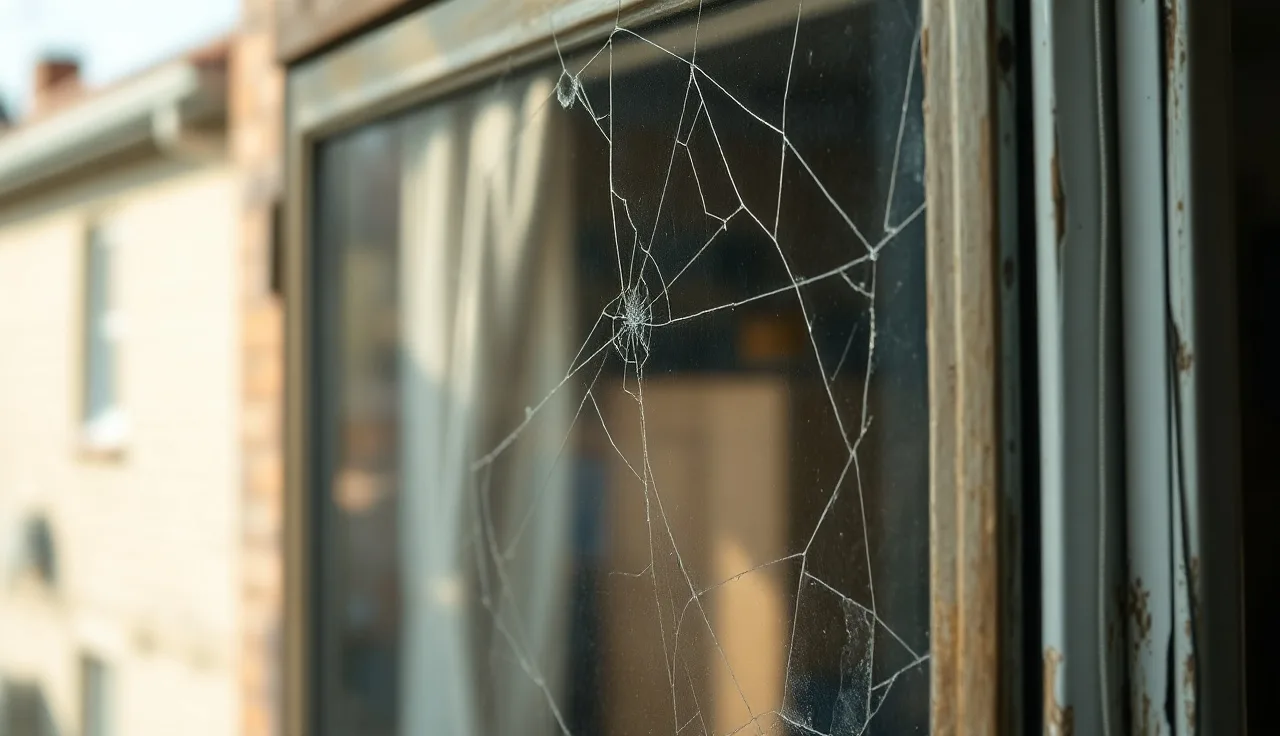
No. A broken window is a direct Housing Quality Standards (HQS) failure under HUD regulations at 24 CFR 982.401. Inspectors flag it as a health and safety deficiency, and landlords typically have 24 hours to 30 days to repair it depending on severity. The unit cannot receive HAP payments until it passes a re-inspection.
What do HUD's Housing Quality Standards actually say about windows?
HUD's Housing Quality Standards (HQS) are the inspection framework every Housing Choice Voucher unit has to pass. They live at 24 CFR 982.401, and they're not vague about windows. [1]
The regulation requires windows in habitable rooms to be "openable to the extent necessary for proper ventilation" and the unit to be "structurally sound." A broken window fails both tests at once. It's a weather hazard, a security gap, and a way for someone to get cut on the glass. Inspectors are trained to flag it on sight.
HUD's inspection form (Form HUD-52580) has a line item for "windows" under each room. [2] The inspector checks whether windows are intact and whether they open and close. A cracked pane, a missing pane, or a window boarded over with cardboard or plywood is a fail, not a pass-with-notes.
The standard also ties back to heat. The unit has to hold at least 68 degrees F in winter. A broken window in a cold climate is a double failure then: a structural defect and a thermal problem in one.
Will a cracked (but not broken through) window fail the inspection?
It depends on the PHA and the inspector, but assume yes. That's the safe read, and it's the one that keeps you from a rescheduled visit.
HUD's Inspector Guidebook sorts conditions into life-threatening (24-hour fix), moderate (30-day fix), and pass-level. [3] A hairline crack in the corner of a double-pane window might be a moderate deficiency rather than an immediate fail, especially if the pane is still intact. A crack running the full width of the glass, or any break where the pane is compromised or missing, is typically a fail.
Most inspectors use one rule: if the glass is broken through, it fails. Some larger urban authorities flag even cosmetic cracks. A few have softer language for minor chips at the edge of the frame.
Landlord reading this before an inspection? Replace the cracked window. A single pane of glass costs less than a failed inspection and a second visit, every time. Tenant moving into a unit and you spot a crack before the inspection? Tell the inspector and photograph it yourself.
You can review the full inspection checklist at what do Section 8 inspections look for for a broader picture of what gets flagged.
How does a broken window get classified, and how long does a landlord have to fix it?
HUD's HQS framework sorts each deficiency into two buckets: life-threatening (sometimes called emergency) or non-life-threatening. The bucket sets the deadline. [1]
| Deficiency Type | Example | Repair Deadline |
|---|---|---|
| Life-threatening / Emergency | Broken window with exposed glass near a child's room; no weather protection in winter | 24 hours |
| Non-life-threatening | Cracked pane still intact; window does not open properly | 30 calendar days |
| Failed re-inspection | Deficiency not corrected within deadline | HAP payments suspended |
A broken window in winter almost always gets coded life-threatening because of the cold and the exposure. A summer inspection with broken glass in a back room might get the 30-day classification, though plenty of PHAs treat any broken glass as a 24-hour item by local policy.
The PHA notifies the landlord in writing after the failed inspection. The clock starts from that notice date, not the inspection date. Miss the deadline and the PHA suspends HAP (Housing Assistance Payment) money. The program doesn't pay retroactively for the period the unit was out of compliance. [4]
For more on what happens after a failure, see what happens if you fail a Section 8 inspection.
What happens to the tenant if the landlord doesn't fix the broken window?
The tenant is stuck in the middle. They didn't fail the inspection, but they feel every consequence of it.
If the landlord doesn't repair within the deadline, the PHA suspends HAP payments. The tenant is still bound by the lease, but the landlord stops getting the housing authority's share of rent. Some landlords use that pressure against the tenant. Some just stall and hope the tenant does their fighting for them.
HUD guidance is clear that a tenant cannot be evicted just because the landlord failed an HQS inspection. [5] The landlord signed the Housing Assistance Payments contract and agreed to keep the unit in compliance. Not fixing a deficiency is the landlord's breach, not the tenant's.
If the unit stays out of compliance and HAP is suspended long enough, the PHA can terminate the HAP contract entirely. Then the tenant's voucher becomes portable and they can take it to a new unit, though they'd go through the move process to do it. The practical reality: most landlords fix the glass fast once the money stops.
Tenants should document everything. Photograph the broken window with a time stamp, get the inspection report from the PHA, and put every conversation with the landlord in writing.
Does the tenant ever have responsibility for fixing a broken window under Section 8?
Yes, in one situation: the tenant caused the damage.
HQS rules at 24 CFR 982.404(b) split deficiencies into landlord-caused and tenant-caused. [1] If the inspector decides the tenant broke the window (accident, negligence, or on purpose), the repair obligation shifts. The PHA can hold the tenant responsible under the lease, and the landlord doesn't have to pay to fix it.
Proving who caused it is messy. Inspectors record what they see. They don't usually rule on blame. Most PHAs handle it by flagging the deficiency, requiring the repair before re-inspection no matter who pays, and leaving the money question to the landlord and tenant's lease.
A tenant who broke a window and hid it before an inspection has a problem. Inspectors look for recent patching, cardboard, tape, or fresh caulk over cracks. A covered-up broken window is still a broken window for HQS.
For general tenant obligations and rights during the inspection process, section 8 inspection guidelines for tenants covers the tenant's side in more depth.
Can a landlord temporarily board up a window to pass inspection?
No. Boarding up a window does not pass HQS.
A boarded window fails the weather-tightness rule and the ventilation rule at the same time. Plywood can't be openable for air, and it isn't a sound weather barrier the way a glazed window is. Inspectors are trained to spot temporary boarding and mark it.
Some landlords try clear plastic sheeting. That fails too. It flunks structural integrity, weather-tightness, and, in most PHAs' reading, ventilation.
The only acceptable repair is a proper window with intact glazing that opens and closes. Storm windows over the existing window are fine as long as the primary window behind them is also intact. Glass block works for windows that aren't required for ventilation (usually bathroom or basement windows, at PHA discretion).
Before your inspection, the hud housing inspection checklist gives you a room-by-room preview of what inspectors check so nothing gets missed.
What other window conditions fail a Section 8 inspection besides broken glass?
Broken glass gets most of the attention, but several other window problems fail too. Knowing the list helps landlords prep a unit and helps tenants flag issues before the inspector shows up.
Windows that won't open. HQS requires windows in sleeping rooms and living areas to open for ventilation. A window painted shut, swollen in its frame, or with a busted sash mechanism fails if it's the primary ventilation source for that room. [3]
Windows that won't lock. Security is part of HQS. Ground-floor windows and windows reachable from a fire escape have to lock. An intact but unlockable window is a moderate deficiency.
Missing screens (in some PHAs). HUD's base HQS doesn't require screens, but many PHAs add local amendments that do, especially where insects are a seasonal health issue. Check your local PHA's administrative plan.
Broken window hardware. A window with a visibly broken latch or lock fails the security requirement even when the glass is fine.
Lead paint on windows in pre-1978 housing. For units built before 1978 with children under age 6, deteriorating paint on window sills and friction surfaces (where the window slides) triggers lead paint protocols under 24 CFR 35. [6] That's separate from the window check but related to it.
See inspection list for section 8 housing for a complete rundown of all deficiency categories.
How do you prepare for a re-inspection after a broken window failure?
A re-inspection is not scheduled automatically. The landlord (or in some PHAs, the tenant) has to request it after the repair is done. Most PHAs let you call, submit online, or email the request. [7]
Before the re-inspector shows up:
1. Replace the glass and confirm the window opens, closes, and locks. 2. Take dated photos of the finished repair. Keep them. 3. Keep the receipt for glass and labor. If the PHA ever questions whether you repaired before the deadline, that's your proof. 4. Be at the unit for the re-inspection, or have someone there. An inspector who can't get in marks it a missed inspection, which can restart the clock or gum up the process.
Most PHAs charge no fee for a first re-inspection. A second or third one (if the unit keeps failing) may trigger a fee or flag the landlord for extra scrutiny on future units.
Once the re-inspection passes, the PHA resumes HAP payments. Depending on policy, they may back-pay for the suspension period if the landlord fixed the issue within the original deadline and the delay was administrative. Miss the deadline and there's no back-pay.
For the timeline from inspection to payment restart, what happens after you pass section 8 inspection covers the next steps in detail.
If you need to move the original inspection date before any of this happens, reschedule section 8 inspection explains how rescheduling works at most PHAs.
Do local PHAs apply stricter window standards than HUD's baseline?
They can, and some do. HUD sets a floor, not a ceiling.
Under 24 CFR 982.401(a)(2), PHAs may adopt additional or stricter HQS requirements as long as they write them into their administrative plan and get HUD approval. [1] Cities with older housing stock, cold climates, or lead paint concerns often do exactly that.
Some housing authorities in the Northeast inspect for double-pane windows where energy efficiency is a local standard. Others require window guards in upper-floor units with children, past what HUD asks for. A few big-city PHAs make working screens part of local HQS.
The only way to know what your PHA requires is to read its administrative plan. Every PHA that runs the Housing Choice Voucher program has to make that plan public. Many post it online. If yours doesn't, ask for a copy.
Landlord thinking about the program in a specific city? Call the PHA before your unit is inspected and ask about local window rules. One phone call can head off a fail. Pittsburgh, Louisville, and Rochester each run their own inspection standards on top of the federal baseline. See city of pittsburgh section 8 housing, section 8 housing louisville ky, and section 8 housing rochester ny for city-specific details.
How long after fixing a broken window can you actually move in?
For a new tenancy, both windows matter: the glass one and the calendar one.
If a unit fails its initial HQS inspection over a broken window, the new tenant can't move in and HAP payments can't start until the unit passes re-inspection. On an initial inspection failure, the PHA typically gives the landlord 30 days for a non-emergency deficiency or 24 hours for an emergency one. [4]
Once the re-inspection passes, most PHAs process the lease and HAP contract within a few business days, though some take longer under heavy load. Move-in is then whatever date the landlord and tenant agree to, as long as it's after the re-inspection passes.
A voucher with an expiration deadline is where delay bites. A failed initial inspection can eat into that window. Tell your PHA the second a unit fails so they know the delay isn't your fault and can grant an extension. Most PHAs will grant a short one here; few make the tenant start over.
For the full timeline from pass to move-in, how long after section 8 inspection can I move in has a detailed breakdown.
VoucherReady's free move-prep tools help tenants track inspection dates, voucher expirations, and re-inspection requests in one place, which is useful in exactly this kind of scenario.
What's the inspector actually looking for, step by step?
HUD's inspector training is detailed. The inspector walks the unit room by room with Form HUD-52580 or its equivalent. [2]
For windows, in each habitable room the inspector checks:
- Is the glass intact? (Any crack or break is noted.)
- Does the window open and close without forcing?
- Does it lock from the inside?
- Is there any sign of water getting in around the frame?
- In pre-1978 units, is the paint on the sill and friction surfaces in good shape?
Inspectors also look at the window from outside. A window that looks fine from the inside can show rot, deterioration, or missing glazing compound from the exterior.
Bedrooms have an extra rule. HQS requires at least one window (or door) for emergency egress. That window has to open from inside without tools, meet a minimum net clear opening (HUD specifies at least 5.7 square feet, 24 inches high, 20 inches wide, sill no higher than 44 inches from the floor), and not be blocked by furniture or bars. [3] A broken egress window in a bedroom is always a life-threatening deficiency.
The full context of what gets inspected room by room is at what happens if you fail a section 8 inspection.
Frequently asked questions
Will a single cracked window automatically fail a Section 8 inspection?
Usually yes, though severity matters. A crack that runs through the glass or compromises the pane is a direct HQS failure under 24 CFR 982.401. A tiny edge chip might be flagged as a minor deficiency by some PHAs rather than an outright fail. Don't count on inspector discretion. Replace cracked glass before the inspection to be safe.
How many windows does an inspector check in a single unit?
Every window in every habitable room. HUD Form HUD-52580 covers each room individually, so a three-bedroom apartment gets windows evaluated in the living room, each bedroom, kitchen, and any additional rooms. Bathrooms and hallways are also checked, though the ventilation standard there can be met by mechanical ventilation rather than a window.
Can a tenant fail their Section 8 voucher because of a broken window?
Not directly. A broken window is a landlord-side HQS failure unless the tenant caused it. If the landlord refuses to fix it and the HAP contract is eventually terminated, the tenant's voucher stays active and they can search for a new unit. Tenants don't lose their voucher because a landlord failed to maintain the property.
What if the broken window was caused by a break-in or storm damage?
It still fails HQS regardless of cause. The inspector doesn't factor in how the damage happened. The landlord (or tenant, if their lease assigns casualty repairs to them) must fix it before re-inspection. If the damage happened mid-lease, the landlord typically has 24 hours for glass breaches and up to 30 days for less urgent damage, per their HAP contract obligations.
Is there a grace period for broken windows discovered during an annual inspection?
There is no automatic grace period, but HQS classifications create one in practice. A non-life-threatening deficiency gives the landlord 30 calendar days to repair and request re-inspection. A life-threatening one (broken glass in a child's room, broken window in winter) gives 24 hours. HAP payments are not suspended immediately; they stop only if the deadline passes without repair.
Does a window screen failure cause a Section 8 inspection to fail?
Under HUD's baseline HQS, screens are not required. But many PHAs add local standards that do require screens, particularly in warmer months or in areas with insect-borne illness concerns. Check your PHA's administrative plan. In states or cities where screens are required locally, a missing or torn screen is a deficiency that must be fixed before approval.
Can a landlord appeal a window-related HQS failure?
Yes. PHAs must have an informal hearing process for landlords who dispute inspection findings, per 24 CFR 982.555. If a landlord believes a window was incorrectly flagged (for example, a crack was pre-existing cosmetic damage that does not compromise the pane), they can request a re-inspection with a supervisor or file an informal complaint. The PHA's administrative plan outlines the appeal steps.
What is the minimum egress window size required for Section 8?
HUD HQS requires bedroom windows used for emergency egress to have a minimum net clear opening of 5.7 square feet, at least 24 inches in height and 20 inches in width, with the sill no more than 44 inches above the floor. The window must open from the inside without tools. A broken or stuck egress window in a bedroom is always classified as a life-threatening deficiency.
What happens to HAP payments while a landlord repairs a broken window?
HAP payments continue during the repair period as long as the landlord is within the allowed repair window (24 hours or 30 days depending on severity). Payments are suspended only if the deadline passes without a passed re-inspection. If the landlord fixes the issue on time and the re-inspection passes, payments resume normally with no gap.
Can a unit pass inspection if a window is boarded up with plywood?
No. Plywood or any boarding does not satisfy HQS requirements for weather tightness, structural integrity, or ventilation. Clear plastic sheeting also fails. The only acceptable repair is installing a proper window with intact glass that opens, closes, and locks. Inspectors are specifically trained to identify boarding as a non-compliant temporary fix.
Do older buildings with original single-pane windows fail Section 8 inspection?
Single-pane windows are not automatically a failure. HQS does not require double-pane or energy-efficient windows at the federal level. A single-pane window that is intact, opens and closes properly, and locks passes HQS. Some PHAs with local energy efficiency standards may differ. The issue is always condition, not technology.
How much does it typically cost a landlord to fix a broken window before re-inspection?
A single residential window pane replacement runs roughly $75 to $200 for glass and basic labor for standard sizes, based on general contractor pricing data. A full window unit replacement runs $300 to $800 or more depending on size and material. The cost is nearly always less than losing 30 or more days of HAP payments, which in most metro markets runs several hundred to over a thousand dollars.
Sources
- HUD, 24 CFR Part 982 (Housing Choice Voucher Program), Section 982.401 (Housing Quality Standards): HQS requirements including structural soundness, weather tightness, ventilation, and the landlord/tenant repair obligation framework.
- HUD, Form HUD-52580 (Inspection Form for Housing Choice Voucher Program): HUD's official inspection form used by PHAs to evaluate each room's windows, structure, and habitability.
- HUD Office of Public and Indian Housing, HCV Inspection Guidebook (PIH-2010-10): Inspector classification of deficiencies as life-threatening (24-hour repair) or non-life-threatening (30-day repair), and egress window minimum dimensions.
- HUD, 24 CFR 982.404 (Maintenance, Deficiencies, and Tenant-Caused Deficiencies): Landlord repair deadlines, HAP payment suspension upon missed deadlines, and tenant-caused deficiency rules.
- HUD Office of Fair Housing and Equal Opportunity, HCV Tenant Rights Guidance: Tenants cannot be evicted solely because the landlord failed an HQS inspection; landlord agreed to maintain the unit as a condition of the HAP contract.
- HUD, 24 CFR Part 35 (Lead Paint Hazard Requirements): Lead paint protocols for pre-1978 units with children under age 6, including friction surfaces on windows and window sills.
- HUD, 24 CFR 982.555 (Informal Hearing Procedures): PHAs must provide an informal hearing process for landlords and tenants who dispute inspection findings or program decisions.
- HUD, Housing Choice Voucher Program Guidebook (7420.10G): PHA authority to adopt additional or more stringent HQS requirements beyond federal baseline, documented in administrative plan.
- HUD, 24 CFR 982.401(a)(2) (PHA-Established HQS Variations): PHAs may adopt additional or more stringent HQS requirements if documented in their administrative plan and approved by HUD.
- HUD PIH Notice 2017-20, Housing Quality Standards Frequently Asked Questions: HUD guidance on how PHAs must handle HQS deficiencies, repair timelines, and conditions under which HAP payments are suspended.