Last updated 2026-07-11
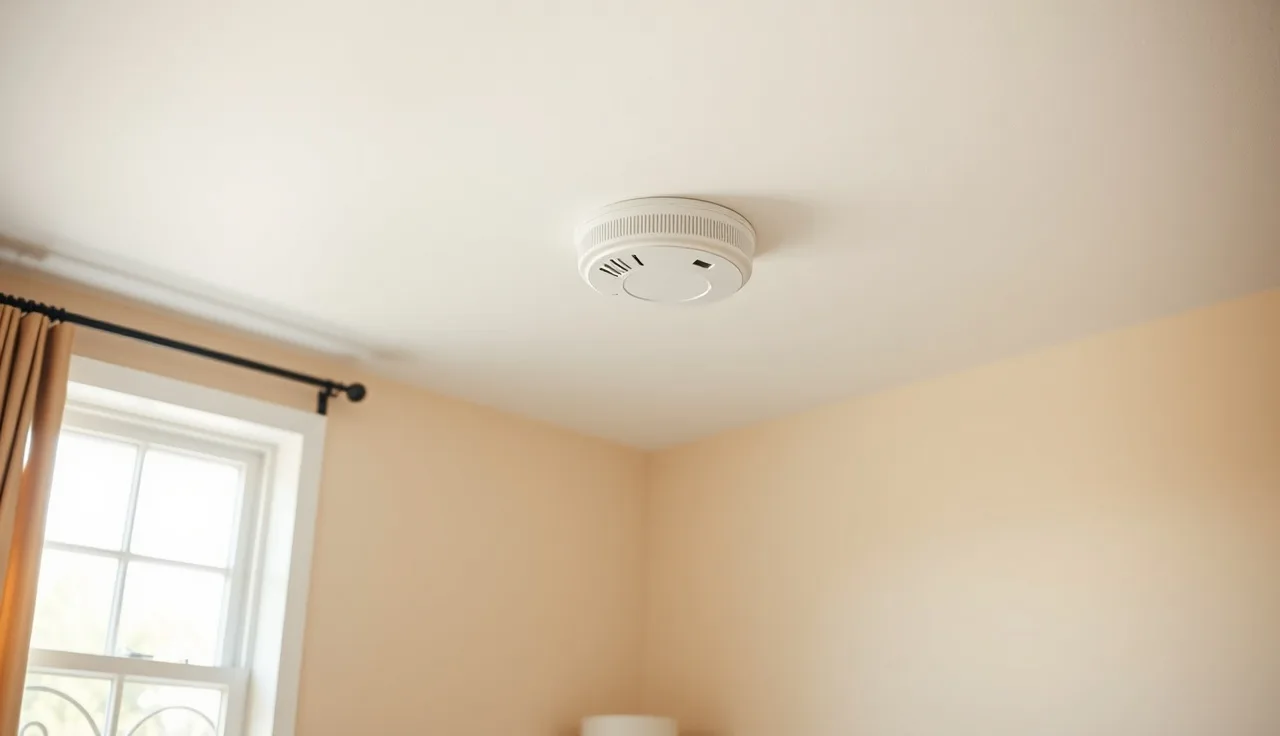
TL;DR
Every Section 8 unit needs at least one working smoke detector on each level of the home, basement included. HUD's Housing Quality Standards (24 CFR 982.401) make this a pass/fail item at every inspection. A missing or dead detector fails the unit on the spot, and the landlord usually gets 24 hours to fix it before the voucher payment stops.
What federal rule actually governs smoke detectors in Section 8 housing?
The rule is 24 CFR 982.401, HUD's Housing Quality Standards (HQS) for the Housing Choice Voucher program. Each unit has to have at least one working smoke detector on every level, including the basement and any sleeping areas. Miss one and the unit fails. [1]
That standard has been federal law since HUD first codified the HQS framework, and HUD reinforced it in its 2016 final rule updating the inspection protocol. A unit without a working smoke detector on every occupied level fails outright. Not a conditional pass. Not a note in the file. A hard fail.
The statutory hook is the Quality Housing and Work Responsibility Act of 1998 (QHWRA), which told HUD to set minimum habitability standards for assisted housing. [2] Smoke detectors are one of the few items HUD treats as non-negotiable no matter what local building code says.
When people talk about the housing choice voucher program, the HQS is the document that decides whether a unit can be rented with a voucher at all. Smoke detectors sit near the top of that list.
Where exactly do smoke detectors need to be placed in a Section 8 unit?
HUD's floor is one detector per level, and "level" means every floor that's occupied or habitable, basement included. An attic counts only if it's finished and used as living space. [1]
That's a floor, not a ceiling. Plenty of PHAs go further and require a detector inside or right outside every bedroom. HUD's own inspection guidance recommends placement near bedrooms because most fatal home fires happen at night. [3] If your local housing authority wrote a stricter standard into its Administrative Plan, that standard wins.
Here's the practical placement picture:
| Location | HUD HQS Minimum | Common PHA Enhanced Standard |
|---|---|---|
| Each floor (above basement) | Required | Required |
| Basement | Required | Required |
| Inside each bedroom | Not required by HUD | Required by many PHAs |
| Outside sleeping area hallway | Not required by HUD | Common requirement |
| Garage (attached) | Not specified | Some PHAs require it |
| Attic (finished/occupied) | Required | Required |
Are you a landlord listing on section 8 houses for rent sites or working with a PHA for the first time? Pull the actual Administrative Plan from that specific housing authority before you assume the federal minimum is enough. Many urban PHAs added the bedroom-adjacent requirement after local fire code updates.
Does a smoke detector need to be hardwired or can it be battery-operated?
HUD's HQS does not require hardwired detectors. A battery-operated detector passes the federal standard as long as it works at the time of inspection. [1] A working battery is part of that. An inspector who tests the unit and finds a dead battery fails the item on the spot.
The trouble with battery-only detectors is human. Tenants pull the battery over a noise complaint or a smoky kitchen and forget to put it back. HUD-REAC inspectors and local PHA inspectors both know that game, and they press the test button on every detector. No excuses at inspection time.
Hardwired detectors with battery backup satisfy HUD and almost every local fire code at once. If you're doing a rehab or building new units for the Section 8 market, hardwired-with-backup is the right call. It costs more up front, and the units fail far less often.
Some PHAs, especially those running Project-Based Voucher (PBV) programs, do require hardwired interconnected detectors in buildings above a certain size. Check the specific PHA's Administrative Plan. The housing authority website for your city or county usually posts it as a PDF.
What happens to a Section 8 unit that fails inspection because of a smoke detector?
A smoke detector failure counts as an emergency deficiency under HUD's inspection protocol, and the landlord gets 24 hours to correct emergency health-and-safety items before the PHA suspends housing assistance payments. [3]
Here's how it usually plays out:
1. Inspector finds a missing or dead smoke detector. 2. Fail goes on the record. The PHA notifies the landlord in writing, often the same day by email. 3. Landlord has 24 hours to install or replace the detector and document the fix. 4. If it's not fixed, the PHA suspends the Housing Assistance Payment (HAP) until the unit passes re-inspection. 5. If the landlord blows past a reasonable additional window (often 30 days total), the PHA can terminate the HAP contract.
For tenants, a HAP suspension doesn't mean you pack up and leave. Your lease still holds. But your landlord stops getting the subsidy, and that creates pressure fast. If you're in this spot, call your PHA worker and ask about emergency re-inspection scheduling. Most PHAs can turn one around in 48 to 72 hours once the landlord certifies the fix.
A landlord who wants a reliable rental assistance business should treat a failed smoke detector inspection like a same-day emergency, not a paperwork item.
Who is responsible for buying and maintaining smoke detectors, the landlord or the tenant?
Under the HQS, the landlord supplies and maintains smoke detectors at move-in and at every inspection. [1] The unit has to pass before the HAP contract gets signed, so the landlord carries the initial installation.
After move-in, it gets murkier and depends on your lease and state law. HUD's regulations don't spell out who replaces the batteries year to year. Most Section 8 leases using HUD's model language put general maintenance of fixtures on the landlord, which courts have mostly read to cover smoke detector upkeep.
A few states settle it cleanly:
- California requires landlords to supply working smoke detectors at the start of each tenancy; tenants have to tell the landlord when one stops working. (Cal. Health & Safety Code Section 13113.7) [4]
- New York City requires landlords in buildings of three or more units to supply and maintain all smoke detectors. (NYC Admin. Code Section 27-2045) [5]
- Texas puts battery replacement on the tenant unless the lease says otherwise. (Tex. Prop. Code Section 92.257) [6]
Best move for landlords: replace every battery at turnover and install 10-year sealed-battery detectors. They run about $25 to $40 per unit at retail, they kill the battery-replacement argument, and inspectors notice the quality. Best move for tenants: test the detector monthly and tell your landlord in writing the moment it fails.
Do carbon monoxide detectors also need to be present in Section 8 units?
Carbon monoxide (CO) detectors are required in Section 8 units that have a fuel-burning appliance (gas stove, gas furnace, oil boiler) or an attached garage, per the 2016 HQS update and HUD's current inspection guidance. [3] HUD folded CO detectors into the inspection form through Notice PIH 2017-20, making them a pass/fail item where they apply. [7]
In a fully electric unit with no attached garage, HUD's HQS does not require a CO detector. State and local codes can still be stricter. As of 2024, more than 35 states have their own CO detector laws that cover rental housing regardless of voucher status.
Here's the shortcut: if there's any gas in the building, even just a gas water heater in a common area, install a combo smoke-CO detector. They run $30 to $60 at hardware stores, cover both requirements at once, and leave nothing to argue about at inspection.
Tenants in hud housing or voucher units with gas appliances should confirm a CO detector is there before signing anything. If it's missing, that's a real HQS deficiency you can report to your PHA.
How do smoke detector rules for Section 8 compare to regular rental housing requirements?
HUD's HQS sits at or above most state landlord-tenant minimums for smoke detectors, and the enforcement (failed inspection, suspended payment) is much sharper than anything a state housing court delivers.
Here's a rough comparison:
| Standard | Requirement | Enforcement Mechanism |
|---|---|---|
| HUD HQS (24 CFR 982.401) | One per level, basement included, functioning | Inspection fail, HAP suspension within 24 hrs |
| International Residential Code (IRC) | One per level + inside each sleeping room | Local building department inspection |
| Typical state landlord-tenant law | At least one per unit or per floor (varies) | Tenant complaint, housing court, slow |
| NFPA 72 (National Fire Alarm Code) | Inside each sleeping room, outside sleeping areas, each level | Adopted by reference in most local codes |
NFPA 72, the National Fire Protection Association's placement standard, is more detailed than HUD's floor. [8] The HQS is not the gold standard for fire safety. It's the minimum to keep the voucher active. Landlords who want to clear both the voucher inspection and the local fire code at once should build to NFPA 72 placement.
For tenants, this gap matters. Passing HQS does not mean your unit meets local fire code. Those are two different inspection regimes. A unit can pass HQS and still get cited by the fire marshal if, say, the bedroom detector is missing.
What do Section 8 inspectors actually check for when they test smoke detectors?
HUD's inspection includes a physical test of every smoke detector in the unit. [3] The inspector presses the test button. No alarm, it fails. No detector on a required level, it fails. Simple as that.
Inspectors also look for:
- Physical damage (cracked housing, missing parts)
- Obstruction (painted over, bagged, taped)
- Age (many modern detectors print a manufactured date, and inspectors flag anything over 10 years, the NFPA replacement interval [8])
- Placement height (detectors go on the ceiling or high on a wall, not near the floor)
One thing inspectors don't always check but that matters: ionization versus photoelectric sensors. HUD doesn't specify a type. Fire safety researchers lean toward photoelectric or dual-sensor detectors for homes because they catch slow, smoldering fires faster, and those are the common ones in houses. [9] The CPSC notes this in its residential fire safety research, though neither HUD nor most state laws require a specific type.
VoucherReady's landlord inspection checklist (part of the one-time landlord kit at VoucherReady.com) includes a pre-inspection smoke detector walkthrough, which catches most failures before the inspector shows up.
Can a tenant fail a Section 8 inspection by tampering with or removing smoke detectors?
Yes. And the fallout can land on both sides.
If a tenant pulls a detector and the unit fails as a result, the PHA can pursue a lease violation. HUD's model lease (HUD-52641) requires the tenant to keep the unit in HQS condition. [10] Ripping out a safety device is a clear violation.
In practice, PHAs often treat the first incident as a warning, especially if the tenant puts the detector back before re-inspection. Repeat it and you risk termination of voucher assistance. That's a heavy price, given how long it takes to get back on a section 8 waitlist.
Landlords who suspect tenant removal should document it with dated before-and-after photos. Send a tech to install a new detector, and if it's gone by the next inspection, you have grounds for a lease violation notice. Most PHAs want the paper trail before they move, so build it.
For tenants: don't yank the detector to stop cooking alarms. Ask your landlord in writing to move it farther from the kitchen (while keeping it on the required level) or to swap an old ionization unit for a photoelectric model, which trips less on cooking smoke.
Are there special smoke detector rules for Section 8 units where a resident has a hearing impairment?
Yes. This is where HUD's fair housing duties stack on top of the HQS fire-safety rules.
Under the Fair Housing Act and Section 504 of the Rehabilitation Act, landlords getting federal housing assistance (which covers every Section 8 HAP contract) have to provide reasonable accommodations to tenants with disabilities. [11] For a tenant with hearing loss, a request for a visual or vibrating smoke alarm is legally protected.
HUD has said so directly. A tenant with a documented hearing impairment can ask the landlord to install an interconnected alarm system with strobe lights or bed shakers as an accommodation. The landlord generally has to provide it unless it's an undue financial or administrative burden, which is a high bar. Interconnected visual/audio alarm systems for a single unit run roughly $200 to $600 installed.
If a landlord refuses a reasonable accommodation, the tenant can file a complaint with HUD's Office of Fair Housing and Equal Opportunity (FHEO) at no cost. [11] The PHA can also flag it during an inspection if it knows about the tenant's documented need.
Do you live in low income senior housing or a property with older residents? This one comes up a lot. Landlords who install interconnected systems building-wide skip the issue entirely.
What should landlords do before a Section 8 inspection to make sure smoke detectors pass?
A failed smoke detector is one of the most preventable inspection failures out there. Here's what actually works.
Two weeks out, walk every level with a step ladder. Press the test button on each detector for three to five seconds. No alarm, replace it now. Don't gamble on it working the day the inspector arrives.
Check the manufactured date on each unit. Over 10 years old, replace it whether or not it alarms. Inspectors are flagging aged detectors more often, and some PHAs have added age as its own deficiency. [8]
Check placement. Detectors go on the ceiling (best) or on a wall no more than 12 inches down from it. Never in a corner. Never next to a window or an HVAC vent, where a draft can push smoke away.
Got gas appliances or an attached garage? Confirm a working CO detector is in place, and run the same test-and-replace on it.
Log it. A dated maintenance log with the brand and model of each detector you replaced is your defense if anyone ever disputes whether you did your job.
Managing several voucher units? VoucherReady.com has a low income housing landlord toolkit with a pre-inspection checklist built around HQS items exactly like this.
One more thing: tell your tenant when you're coming. You need cooperation, and 24-hour notice is standard, and legally required in most states, for non-emergency landlord entry.
Does HUD's smoke detector rule apply to project-based Section 8 and public housing too?
The details shift a little, but the core rule holds: working smoke detectors are mandatory in all HUD-assisted housing.
Project-Based Voucher (PBV) units use the same HQS standard at 24 CFR 982.401, because PBV units get HQS inspections just like tenant-based voucher units. [1]
Public housing (the separately funded low-rent program) runs under HUD's Uniform Physical Condition Standards at 24 CFR 5.703, and it carries the same smoke detector pass/fail requirement. Public housing authorities do annual REAC inspections, and a detector failure scores as the same emergency-level deficiency. [12]
Project-Based Section 8 (the older program under Section 8 of the Housing Act, not to be confused with PBV) runs under HUD's contracts and REAC inspection protocol, again with smoke detectors as a mandatory item.
The takeaway is blunt: if HUD pays any part of the rent, in any program, a working smoke detector on every level is required. No HUD housing program makes it optional. A tenant in any HUD-assisted unit who finds a missing or broken detector should report it to the property manager in writing, and if it's not fixed within 24 hours, escalate to the PHA or HUD field office.
Frequently asked questions
How many smoke detectors are required in a Section 8 unit?
HUD requires at least one working smoke detector on every level of the unit, basement included. A two-story home with a basement needs a minimum of three. Many PHAs add a requirement for detectors inside or right outside each sleeping area, so check your specific housing authority's Administrative Plan for the exact count.
Can a Section 8 unit fail inspection just because of a smoke detector?
Yes. A missing or non-functioning smoke detector is a hard fail under HUD's Housing Quality Standards. The landlord gets 24 hours to fix it or the PHA can suspend housing assistance payments. It's one of the most common and most preventable HQS failures inspectors report.
Who pays for smoke detectors in a Section 8 rental, the landlord or the tenant?
The landlord supplies working smoke detectors at move-in and keeps them functional. State law varies on ongoing battery replacement, with California and New York putting it on landlords and Texas putting it on tenants. Landlords who install 10-year sealed-battery detectors eliminate most disputes about maintenance responsibility.
Does a Section 8 unit need a carbon monoxide detector too?
Yes, if the unit has any fuel-burning appliance (gas stove, furnace, water heater) or an attached garage. HUD added CO detectors as a pass/fail inspection item in PIH Notice 2017-20. Fully electric units with no attached garage are exempt from HUD's CO requirement, though state law may still apply.
What happens if a tenant removes a smoke detector in a Section 8 unit?
The unit fails inspection and the tenant violates the HUD model lease, which requires keeping HQS-compliant conditions. Repeated violations can lead to termination of voucher assistance. Landlords should document detector removal with dated photos and file a lease violation notice with the PHA.
Do smoke detectors in Section 8 units need to be hardwired?
No. HUD's HQS allows battery-operated detectors. The detector has to work at inspection, meaning a functional battery is required. Some PHAs and local fire codes require hardwired detectors in multi-unit buildings, though. Landlords should check their PHA's Administrative Plan and local building code.
How long does a landlord have to fix a smoke detector after a Section 8 inspection failure?
24 hours. Smoke detector failures are emergency deficiencies under HUD's inspection protocol. If it's not corrected within 24 hours, the PHA may suspend housing assistance payments. Most PHAs schedule a re-inspection within 48 to 72 hours once the landlord certifies the fix is done.
Can a hearing-impaired tenant get a different type of smoke alarm through Section 8?
Yes. Under the Fair Housing Act and Section 504 of the Rehabilitation Act, a tenant with hearing impairment can request a visual or vibrating alarm system as a reasonable accommodation. The landlord, as a recipient of federal housing funds, generally must provide it. HUD's Office of Fair Housing handles complaints if a landlord refuses.
Do smoke detector rules differ between tenant-based and project-based Section 8?
The outcome is the same: working detectors on every level are mandatory in both. Tenant-based and project-based voucher units use the HQS standard under 24 CFR 982.401. Public housing uses the UPCS under 24 CFR 5.703. All treat a missing or broken detector as a pass/fail emergency deficiency.
How old can a smoke detector be before it needs to be replaced in a Section 8 unit?
NFPA 72 recommends replacing smoke detectors 10 years after the manufactured date. HUD's HQS sets no mandatory age limit, but inspectors increasingly flag aged detectors and some PHAs have added age-based deficiency items. If your detector is over 10 years old, replace it before any HQS inspection.
What type of smoke detector, ionization or photoelectric, is required for Section 8?
HUD does not specify detector technology. Either type passes HQS inspection as long as it works. Fire safety researchers recommend photoelectric or dual-sensor detectors for homes because they respond faster to slow smoldering fires. Landlords who want fewer nuisance alarm complaints often prefer photoelectric models.
Can a tenant report a missing smoke detector to the PHA without the landlord knowing?
Yes. Tenants can contact their PHA any time to report an HQS deficiency, including a missing smoke detector. The PHA will typically notify the landlord and may schedule an interim inspection. Reporting in writing (email or certified letter) builds a paper trail that protects the tenant if retaliation follows.
Does passing a Section 8 smoke detector inspection mean the unit meets local fire code?
Not necessarily. HQS and local fire codes are separate inspection regimes. A unit can meet HUD's minimum of one detector per level while still lacking bedroom detectors required by your local fire code or NFPA 72 placement. Landlords should verify both standards separately before renting.
Sources
- HUD, 24 CFR 982.401 Housing Quality Standards: HUD HQS requires at least one functioning smoke detector on each level of the dwelling unit, including the basement, as a pass/fail inspection item.
- HUD, Quality Housing and Work Responsibility Act of 1998 overview: QHWRA directed HUD to set minimum habitability standards for assisted housing, underpinning the HQS framework.
- HUD, Housing Choice Voucher Program Guidebook (inspection and HQS timelines): HUD guidance requires physical testing of every smoke detector and gives landlords 24 hours to correct emergency health-and-safety deficiencies before HAP suspension.
- California Legislative Information, Health & Safety Code Section 13113.7: California requires landlords to supply working smoke detectors at the start of each tenancy; tenants are responsible for notifying the landlord if a detector malfunctions.
- New York City Administrative Code Section 27-2045: NYC requires landlords in buildings of three or more units to supply and maintain all smoke detectors.
- Texas Property Code Section 92.257: Texas places battery replacement responsibility on the tenant unless the lease specifies otherwise.
- HUD, PIH Notice 2017-20: Utility Allowance Schedules and Carbon Monoxide Detectors: HUD Notice PIH 2017-20 added carbon monoxide detectors as a pass/fail HQS inspection item for units with fuel-burning appliances or attached garages.
- NFPA 72, National Fire Alarm and Signaling Code: NFPA 72 recommends replacing smoke detectors 10 years after manufacture and specifies placement inside each sleeping room and outside sleeping areas on each level.
- U.S. Consumer Product Safety Commission, residential smoke alarm research: CPSC notes that photoelectric detectors respond faster to slow, smoldering fires common in residential settings.
- HUD, Model Voucher Tenancy Lease Addendum (HUD-52641): HUD's model lease requires the tenant to maintain the unit in a condition that meets HQS.
- HUD, Office of Fair Housing and Equal Opportunity (Fair Housing Act and Section 504): Landlords receiving federal housing assistance must provide reasonable accommodations, such as visual or vibrating smoke alarms, to tenants with disabilities; complaints go to HUD FHEO at no cost.
- HUD, 24 CFR 5.703 Physical Condition Standards for Public Housing: Public housing units must meet UPCS under 24 CFR 5.703, which includes smoke detectors as a mandatory pass/fail health and safety item.