PHA Technology Modernization
TL;DR: How PHAs are adopting technology to improve Section 8 administration. This guide walks through the process step by step, explains what both landlords and tenants need to know, and offers practical tips for working with your housing authority.

Overview
If you are dealing with overview, start here. Overview is a topic that deserves a clear explanation.
Public Housing Authorities operate under federal regulations set by HUD, but each PHA has flexibility in how it implements many aspects of the program. That means the specifics can vary significantly depending on your location. A PHA in a large metro area may handle this differently than a small rural housing authority, and both approaches can be compliant with HUD rules.
The information in this guide is based on federal regulations in 24 CFR Part 982 and common PHA practices. Always check with your specific PHA for their local procedures, as they may have additional requirements or different timelines than what is described here.
There are roughly 2,300 PHAs operating across the United States, ranging from small rural agencies with a few hundred vouchers to major metropolitan authorities managing tens of thousands. The size, staffing, and resources of your PHA directly affect processing times, communication responsiveness, and the level of individual attention you receive. Larger PHAs tend to have more formalized processes and online systems, while smaller PHAs may offer more personalized service but fewer technology options.
Regardless of PHA size, the federal rules are the same. What changes is how the PHA implements those rules within the flexibility HUD allows. Reading your PHA's Administrative Plan is the single best way to understand how technology modernization works in your specific jurisdiction.
How the Process Works
Here is how most PHAs approach technology modernization, broken into the key steps that tenants and landlords encounter:
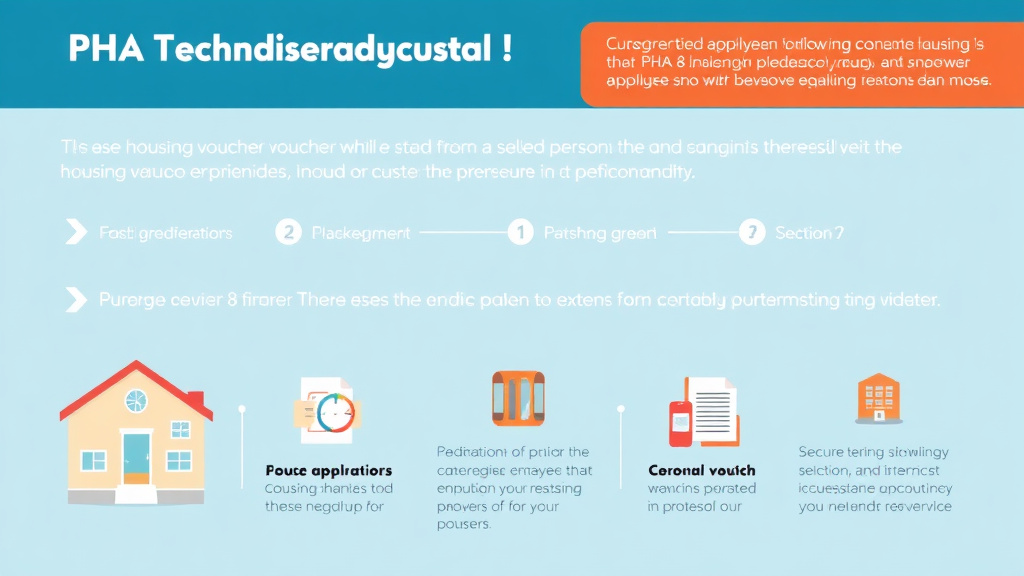
| Step | What Happens | Your Role | Typical Timeline |
|---|---|---|---|
| 1. Initiation | Process begins through application, scheduled review, or triggering event | Submit required request or respond to PHA notice | Varies by trigger |
| 2. Documentation | PHA requests and collects required documentation | Provide all requested documents completely and on time | 1-3 weeks |
| 3. Review | PHA staff reviews documents and verifies information | Be available for follow-up questions | 2-6 weeks |
| 4. Determination | PHA makes a decision and issues written notice | Review the notice carefully | 1-2 weeks |
| 5. Implementation | Decision is put into effect | Take any required follow-up actions | Varies |
The single biggest factor in how quickly this process moves is the completeness of your initial documentation. Incomplete submissions are the top cause of delays at most PHAs. Before you submit anything, review the requirements list twice and make sure every item is included, every form is signed, and every document is legible.
Federal Requirements and PHA Policies
The regulatory framework for technology modernization comes from multiple sources:
- 24 CFR Part 982. The primary federal regulation governing the Housing Choice Voucher program. This sets the baseline rules that all PHAs must follow.
- HUD Notices and Guidebooks. HUD issues periodic notices (PIH notices) that provide additional guidance and sometimes change or clarify program requirements. PHAs are expected to implement these notices.
- PHA Administrative Plan. Each PHA documents its specific policies in an Administrative Plan. This is a public document that you can request from your PHA or often find on their website. The Admin Plan is your best source for understanding how your specific PHA handles this process.
- State and local law. In some cases, state or local regulations add additional requirements or protections that the PHA must follow.
If you encounter a PHA policy that seems unfair or contradicts what you understand the federal rules to be, ask the PHA to cite the specific regulatory authority for their policy. PHAs can set local policies within the framework HUD provides, but they cannot create policies that conflict with federal requirements.
Key Definitions and Terminology
Working with PHAs involves specialized vocabulary. Here are the terms you are most likely to encounter when dealing with technology modernization:
| Term | What It Means |
|---|---|
| HCV (Housing Choice Voucher) | The formal name for Section 8 tenant-based vouchers |
| HAP (Housing Assistance Payment) | The monthly payment the PHA sends to landlords |
| Admin Plan (Administrative Plan) | The PHA's written policy document for program operations |
| FMR (Fair Market Rent) | HUD-published rent levels used to set payment standards |
| Recertification | Annual or interim review of tenant eligibility and income |
| Abatement | Suspension of HAP payments, usually due to inspection failure |
| Portability | The ability of a voucher holder to move between PHA jurisdictions |
| Informal hearing | The dispute resolution process available to program participants |
Knowing these terms helps you communicate more effectively with PHA staff and understand the notices and correspondence you receive. When in doubt about a term used in a PHA document, ask for clarification rather than guessing.
Practical Guidance for Landlords
If you are a landlord navigating technology modernization in the Section 8 program, here is what works:
- Know your PHA's specific requirements. Do not assume that what worked at another PHA will work at yours. Read the relevant sections of your PHA's Administrative Plan before you start.
- Submit clean documentation. Provide clear, complete, legible documents the first time. This alone can cut your processing time in half compared to landlords who submit incomplete paperwork.
- Build relationships. Having a reliable contact at the PHA makes everything easier. Attend landlord orientations, respond promptly to PHA requests, and be professional in all interactions.
- Track deadlines. Many PHA processes have specific deadlines. Missing a deadline can mean starting over, losing your place in a queue, or even losing a tenant's voucher. Put every deadline in your calendar with a reminder a week before.
- Use the online portal. If your PHA has a landlord portal, use it for document submission, payment tracking, and communication. Electronic records create an automatic paper trail.
- Keep records of everything. Every document you submit, every notice you receive, every phone call you make. Note the date, time, and who you spoke with. This documentation is your protection if there is ever a dispute.
Practical Guidance for Tenants
Tenants working through technology modernization should focus on:
- Responding promptly to all PHA communications. When your PHA sends you a notice or request, respond within the timeframe specified. If you cannot meet a deadline, contact your caseworker before the deadline passes to request an extension.
- Reporting changes as required. Your program obligations require you to report changes in income, household composition, and other circumstances within a specific timeframe (usually 10-30 days depending on the PHA). Failure to report changes can result in overpayment charges or program termination.
- Keeping your contact information current. If the PHA cannot reach you, they cannot help you. Update your phone number, email, and mailing address whenever they change.
- Understanding your rights. You have the right to receive written notice of any decision that negatively affects your participation, and you have the right to an informal hearing to dispute that decision. These rights are not optional. The PHA must provide them.
- Asking for help. If you do not understand something, ask. Your caseworker should be able to explain the process in plain language. If they cannot or will not, ask to speak with a supervisor or contact a local tenant advocacy organization.
Troubleshooting Common Issues
| Issue | Common Cause | What to Do |
|---|---|---|
| Processing delay beyond stated timeline | Incomplete documents, staff shortage, backlog | Contact PHA in writing asking for status update and expected completion date |
| Cannot reach assigned caseworker | High caseloads, limited phone hours | Try email or portal; visit during office hours; ask for supervisor |
| Received unfavorable decision | Policy application or documentation issue | Request written explanation; review Admin Plan; request informal hearing within deadline |
| Conflicting information from PHA staff | Complex rules, different interpretations | Ask for the answer in writing; reference the specific Admin Plan section |
| Documents appear lost | Processing volume, filing errors | Resubmit copies (never originals); request confirmation of receipt |
Most issues can be resolved at the PHA level with patience and persistence. If you reach a dead end with your PHA, your options include filing a complaint with HUD's local field office, contacting your elected representatives, or reaching out to legal aid organizations that specialize in housing issues.
Documentation Best Practices
Good record-keeping is your strongest tool when working with any PHA. Follow these practices to protect yourself:
- Keep a dedicated file. Whether physical or digital, maintain a separate file for all Section 8 correspondence. Include copies of everything you submit, every notice you receive, and notes from every phone call or in-person interaction.
- Note dates and names. For every communication with the PHA, record the date, time, name of the person you spoke with, and a summary of what was discussed. This creates a trail you can reference if there is ever a dispute about what was said or agreed to.
- Submit documents with tracking. When submitting documents by mail, use certified mail with return receipt. When submitting in person, ask for a date-stamped copy of your submission. When submitting electronically, save confirmation emails or screenshots.
- Never submit originals. Always keep originals and submit copies. If the PHA loses your documents (it happens more often than it should), you can easily resubmit without having to obtain replacement originals.
- Follow up in writing. After phone conversations about important matters, send a follow-up email summarizing what was discussed and any agreed-upon next steps. This creates a written record of verbal agreements.
These practices may seem excessive for routine interactions, but they become invaluable when something goes wrong. A well-documented file has resolved many disputes that would otherwise have become he-said-she-said situations with no clear resolution.
Your Rights as a Program Participant
Both landlords and tenants have specific rights within the Section 8 program. Understanding these rights helps you advocate for yourself when working with your PHA:
| Right | Applies To | What It Means |
|---|---|---|
| Written notice of adverse actions | Both landlords and tenants | PHA must notify you in writing before taking action that negatively affects your participation |
| Informal hearing | Tenants (and landlords in some cases) | You can dispute PHA decisions through a formal hearing process |
| Access to your file | Both landlords and tenants | You can review the PHA's records related to your participation |
| Reasonable accommodations | Tenants with disabilities | PHA must modify policies or provide aids when needed for disability access |
| Freedom from discrimination | Both landlords and tenants | PHA must comply with all fair housing requirements |
If you believe your rights have been violated, document the situation thoroughly and consider contacting a local legal aid organization that handles housing cases. Many offer free consultations and can help you understand your options.
Navigate the Process with VoucherReady
VoucherReady helps both landlords and tenants work more effectively with their PHAs. Our platform provides up-to-date guidance on program requirements, document checklists, timeline tracking, and plain-language explanations of PHA processes.
Get started with VoucherReady to simplify your Section 8 experience.
Related Articles
Try our free tools