Last updated 2026-07-10
TL;DR
The Charlotte Housing Authority (CHA) runs the Section 8 Housing Choice Voucher program for Charlotte and Mecklenburg County, NC. The waitlist is closed as of mid-2025. Payment standards track HUD Fair Market Rents, roughly $1,142 for a studio and $2,435 for a four-bedroom. Landlords need an HQS-passing unit before the first payment lands, and tenants can port their voucher elsewhere after 12 months.
What is the Charlotte Housing Authority and what does it actually do?
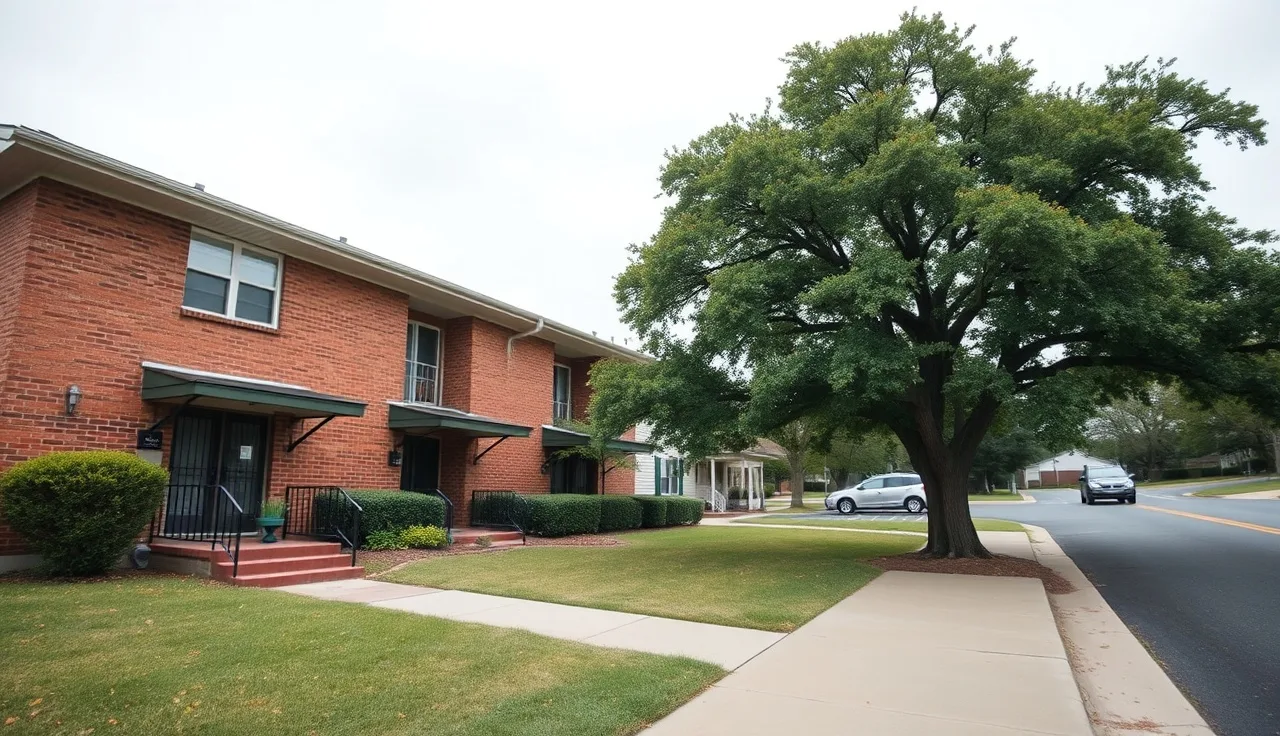
The Charlotte Housing Authority (CHA) is the public housing agency (PHA) for Charlotte and Mecklenburg County, North Carolina. It takes federal money from the U.S. Department of Housing and Urban Development (HUD) and spends it on two main programs: the Housing Choice Voucher program, which most people still call Section 8, and a set of public housing developments the agency owns outright [1].
On the voucher side, CHA sends rental subsidies straight to landlords on behalf of income-qualified tenants. The tenant pays a share of rent (usually 30% of adjusted income), and CHA covers the rest up to a local ceiling called the payment standard. The landlord has to own a unit that passes a Housing Quality Standards (HQS) inspection and sign lease terms CHA reviews and approves [2].
CHA also runs affordable developments across the city, manages homeownership programs, and links residents to services like job training. For most people reading this, the voucher is the piece that matters, so that's where this article spends its time.
One wrinkle. The City of Charlotte reorganized its housing agencies over a decade ago, and the entity that issues vouchers today operates under the Charlotte Housing Authority name with offices in Charlotte. Office locations and phone numbers drift, so confirm current details on CHA's official site before you show up anywhere [3].
Is the Charlotte Housing Authority waitlist open right now?
No. As of mid-2025, CHA's Housing Choice Voucher waitlist is closed to new applicants [3]. That's normal for a high-demand city. CHA opens the list for short windows, sometimes only a few days, then shuts it again for months or years. The last big opening pulled in tens of thousands of applicants for a sliver of the available slots.
Here's the honest part. Nobody outside CHA knows exactly when the list reopens. HUD rules require a PHA to publicly announce any opening under 24 CFR 982.206, and CHA usually does that through local media, its own website, and community organization networks [2]. Signing up for CHA email alerts and following local housing nonprofits is the closest thing to an early warning you'll get.
While you wait, do two things.
Check whether other North Carolina PHAs have open lists. You can port a voucher to Charlotte later, once you've leased up somewhere else and hit the 12-month residency mark. And scan the open Section 8 waiting lists in surrounding counties, since a few run shorter queues than Mecklenburg.
HUD data shows average voucher waits in large metros commonly run past two to three years, and in a tight market like Charlotte they stretch longer [1]. Getting on several open lists isn't gaming anything. It's standard practice, and HUD rules allow it.
Who qualifies for a CHA Housing Choice Voucher?
Four things decide eligibility: income, family size, citizenship or eligible immigration status, and rental history. Miss on any one and the application stalls.
Income limits. HUD sets these every year for the Charlotte-Concord-Gastonia metro. Voucher eligibility generally targets households at or below 50% of Area Median Income (AMI), and federal law makes PHAs steer 75% of new vouchers to households at or below 30% of AMI [2]. The table shows HUD's 2024 limits for the Charlotte metro.
| Household Size | 50% AMI (Very Low Income) | 30% AMI (Extremely Low Income) |
|---|---|---|
| 1 person | $37,550 | $22,550 |
| 2 persons | $42,900 | $25,750 |
| 3 persons | $48,250 | $28,950 |
| 4 persons | $53,600 | $32,150 |
| 5 persons | $57,900 | $34,750 |
| 6 persons | $62,200 | $37,300 |
Source: HUD FY2024 Income Limits, Charlotte-Concord-Gastonia HUD Metro FMR Area [4]
Citizenship. At least one household member has to be a U.S. citizen or eligible non-citizen. Mixed-status families can apply, and the subsidy gets prorated to cover only eligible members [2].
Rental history. CHA can deny you if you were evicted from HUD-assisted housing for drug-related criminal activity within the past three years, or if you owe money to any PHA [2]. Minor issues don't auto-disqualify you. Read CHA's Admissions and Continued Occupancy Policy (ACOP), which the agency has to make public.
Preferences. Even qualified applicants get sorted by local preferences, like being a Charlotte resident, working, or being homeless. These move you up or down the list, and they change from cycle to cycle. Check the current ACOP for which ones CHA is using now.
What are CHA's current payment standards?
The payment standard is the most CHA will pay toward your rent and utilities. It's built off HUD's Fair Market Rents (FMRs) for the area and updates every year. A PHA can set its standard between 90% and 110% of FMR, and with HUD approval it can reach 120% [2].
HUD's FY2025 Fair Market Rents for the Charlotte-Concord-Gastonia area are the best public stand-in for CHA's payment standards, since CHA doesn't always publish a standalone table. The real CHA numbers may sit a little above or below these, so ask CHA for the current schedule before you sign anything [5].
| Unit Size | HUD FY2025 FMR (Charlotte metro) |
|---|---|
| Studio (0-BR) | $1,142 |
| 1-Bedroom | $1,311 |
| 2-Bedroom | $1,580 |
| 3-Bedroom | $2,059 |
| 4-Bedroom | $2,435 |
Source: HUD FY2025 Fair Market Rents, Charlotte-Concord-Gastonia HMFA [5]
What that means when you're apartment hunting: say you find a two-bedroom at $1,700 a month and the payment standard is $1,580. CHA won't paper over that $120 gap. You pay it yourself, on top of your normal 30%-of-income share. Paying above the standard is legal, but plenty of households can't swing it, so knowing the number before you shop saves real heartache.
Landlords, treat the payment standard as your ceiling on what CHA contributes. Price a unit at or below it, pass inspection, and the math usually works. Charlotte rents have pushed close to or above FMR in a lot of neighborhoods, so confirm current figures with CHA before you list anything as Section 8 ready.
How does the CHA application process work when the waitlist opens?
When CHA opens the list, the pattern is predictable. CHA announces a window, often 3 to 10 days, when it accepts applications online or at set locations. After the window closes, CHA runs a lottery across all completed applications and ranks the winners by preference category. Selected applicants land on the waitlist in that ranked order [2].
Getting on the list is not the same as getting a voucher. You wait. When CHA reaches your name, you sit for an eligibility interview and hand over income documents, proof of identity, birth certificates, and Social Security numbers for everyone in the household. CHA then locks in your final eligibility and your voucher bedroom size.
Once the voucher is in hand, you get a search period, at least 60 days by federal rule, to find a unit [2]. CHA can extend it if you ask and have a good reason, but no extension is guaranteed. The clock starts the day you get the voucher. Start looking that day.
Already on the list? Log into CHA's portal and confirm your status. PHAs have to purge applicants who ignore annual update requests, and one missed letter can drop you off without another warning.
What do landlords need to do to accept a CHA voucher?
Landlords don't register with CHA ahead of time, but several steps have to happen before the first HAP (Housing Assistance Payment) shows up [2].
The sequence goes like this:
1. Agree to lease to a voucher holder and tell CHA about the proposed tenancy. 2. Submit a Request for Tenancy Approval (RFTA), which sets the unit address, the proposed rent, and the lease start date. 3. CHA checks whether the rent is reasonable against unassisted units nearby. If it isn't, CHA can reject it or push you to negotiate. 4. CHA schedules the HQS inspection. The unit has to pass before any money moves. 5. Once it passes, CHA signs a Housing Assistance Payments contract (the HAP contract) with you. Payment starts there, not before.
HQS inspections check working smoke detectors, no peeling lead paint (a real concern in pre-1978 buildings), enough heat, hot water, and a sound structure. The full list of what inspectors look at lives in 24 CFR 982.401 [6]. Any failed item has to be fixed and re-inspected before the tenancy starts, and CHA won't backdate payments to cover the gap between a failed and a passed inspection.
For more on the landlord side, the housing choice voucher program explainer covers HAP contract terms and annual re-inspection. First-timers usually find the initial approval slower than they expect. Four to eight weeks is common in a busy market, so build that into your vacancy math.
One blunt point. North Carolina has no statewide source-of-income anti-discrimination law as of 2025, so Charlotte-area landlords generally aren't required to accept vouchers [7]. Some do it anyway, for the steady payment or on principle. If you're a tenant and a landlord turns down your voucher, that's legal across most of Mecklenburg County unless a local ordinance says otherwise.
How does rent reasonableness work in Charlotte?
Before CHA approves any lease, it tests whether the rent is reasonable. Under 24 CFR 982.507, CHA has to find that a unit's gross rent "is not more than rent charged for comparable unassisted units in the same market area" [6]. That test is separate from the payment standard, and landlords trip over the difference all the time.
CHA lines up your unit against similar ones nearby, weighing size, location, age, amenities, and condition. Ask more than comparable unsubsidized units rent for, and CHA tells you to drop it or walks away. A rent can sit below the payment standard and still flunk reasonableness, or clear reasonableness and still blow past the payment standard.
For landlords, the rule is simple: you can't charge a voucher tenant more than you'd charge anyone else for the same unit. The market sets the ceiling. In Charlotte's current market, with rents high across most neighborhoods, plenty of units pass without a fight. Check with CHA directly if you're unsure.
Can you port a Section 8 voucher to or from Charlotte?
Yes. Portability is a federal right built into the voucher program. Under 24 CFR 982.353, a holder who has finished the initial lease term (a minimum of one year) can move anywhere in the country a PHA runs the program [6].
Bringing a voucher from another city into Charlotte means contacting two agencies: your current PHA (the "initial PHA") and CHA (the "receiving PHA"). CHA can absorb your voucher into its own program or bill your initial PHA for it. With a closed waitlist and tight funding, CHA may choose to bill rather than absorb, which keeps your initial PHA in the picture. Either way, payment standards, utility allowances, and unit size rules switch to Charlotte's schedule once you port in.
Leaving Charlotte works the same way in reverse. You've lived in your unit at least 12 months (or your initial lease term is up), you give your landlord proper notice and tell CHA, and CHA sends portability paperwork to the receiving PHA.
Start 60 to 90 days before your target move date. PHAs are slow, paperwork disappears, and the receiving PHA might have an inspection backlog. Porting is one of the biggest sources of confusion for voucher holders, and a timing miss can leave you with a voucher and no home.
Browsing section 8 houses for rent in your target neighborhood before you start the port tells you fast whether units exist and whether they price inside the new PHA's payment standards.
What public housing does CHA manage in Charlotte?
Past the vouchers, CHA runs a set of public housing developments in Charlotte. These are units the agency owns and manages directly, not subsidies attached to private-market apartments. Rent runs about 30% of adjusted household income, the same math as the voucher side.
The portfolio has shrunk. Older projects came down and got rebuilt through HOPE VI and Choice Neighborhoods work, with some sites turning into mixed-income communities where a share of units stays affordable while the rest go at market rate. HUD has pushed this nationally to break up concentrated poverty [12].
For applicants, public housing and vouchers are two separate programs with two separate waitlists. You can apply for both, and being on one list doesn't touch your spot on the other. Public housing waits in Charlotte run long too, though the process differs from the voucher lottery.
If you want low income senior housing specifically, CHA has properties set aside for elderly residents, and HUD's Section 202 program funds more senior-specific housing around Charlotte through separate nonprofit operators.
What other rental assistance is available in Charlotte if CHA can't help right now?
Closed voucher list, long public housing queue. Here's where else to look around Charlotte.
HUD-assisted multifamily housing. HUD's resource locator lists privately owned apartment communities in Mecklenburg County with project-based subsidies. The subsidy stays with the unit, not the tenant, and rent caps at 30% of income. Individual property waitlists often move faster than the CHA voucher list [1].
Low Income Housing Tax Credit (LIHTC) properties. Privately built apartments with income-restricted rents, usually pegged at 50% or 60% of AMI. That's not the same as 30%-of-income voucher help, but it still lands below market. The North Carolina Housing Finance Agency keeps a database of LIHTC properties. Our low income housing tax credit overview walks through how these work.
Mecklenburg County emergency rental assistance. The county and city have run emergency rental programs on and off, mostly funded by federal pandemic dollars. Availability comes and goes, so check the county's Community Support Services page for anything active now.
Neighboring PHAs. Gaston, Cabarrus, and Union counties each run small HCV programs. Their lists open and close on their own schedule, separate from CHA, so it pays to check often if you're anywhere in the broader metro.
VoucherReady's free waitlist tracker can flag when nearby PHAs open, which beats checking a dozen sites by hand. Our rental assistance guide covers North Carolina options in more depth if you want the full map.
What are CHA tenants' rights during inspections and lease disputes?
CHA tenants have rights under both HUD rules and North Carolina landlord-tenant law. The overlap is where people get lost.
Under HUD rules (24 CFR 982.405), CHA runs an initial HQS inspection before the tenancy starts and inspects on a regular schedule after that [6]. If a landlord won't make the repairs a unit needs to pass, CHA can abate (suspend) the landlord's HAP payment. You aren't on the hook for the abated rent when the problem is on the landlord's side, though your lease obligations technically hold until a judge rules otherwise.
A dispute that isn't about the subsidy, like a security deposit fight or a habitability complaint, falls under the North Carolina Residential Rental Agreements Act (G.S. Chapter 42) [10]. CHA is not your advocate in a private civil case. For those, Legal Aid of North Carolina covers Mecklenburg County and offers free help to low-income renters.
A dispute with CHA itself is different. Before CHA takes adverse action against your voucher, like termination or a subsidy cut, you have the right to an informal hearing. That right lives in 24 CFR 982.555 [6]. Ask for the hearing in writing, keep your copy, and beat whatever deadline CHA puts in the notice.
One myth worth killing: your landlord can't raise your rent on a whim just because the voucher covers most of it. Any increase has to clear CHA's approval process, give you proper notice under NC law (usually 7 days for a month-to-month lease), and can't take effect until CHA signs off and updates the HAP contract.
How does CHA calculate your portion of the rent?
Your share of rent isn't a flat cut of the unit's asking price. CHA builds it from your household's adjusted income, then checks it against the payment standard.
The short version: CHA figures your Total Tenant Payment (TTP), which is the highest of three numbers, 30% of monthly adjusted income, 10% of monthly gross income, or the minimum rent CHA has set (typically $25 to $50) [2]. Your TTP is the floor for what you pay toward rent plus utilities.
If the unit's gross rent (contract rent plus the utility allowance for tenant-paid utilities) sits at or below the payment standard, your out-of-pocket cost is just your TTP. If gross rent runs over the payment standard, you pay the overage on top of your TTP. In an expensive market, that overage climbs fast.
Run the numbers. Say your TTP is $400 a month. The payment standard for a two-bedroom is $1,580. The unit rents for $1,700, with a $100 utility allowance folded in. Gross rent is $1,700. The amount above the payment standard is $120. Your monthly payment is $400 plus $120, so $520. CHA pays $1,180.
If that math still feels slippery, HUD's Public and Indian Housing office publishes plain-language guides on rent calculation worth a read [1].
Where can tenants and landlords get direct help from CHA?
CHA's main office is in Charlotte, and the address and phone number live on CHA's official website (charlotteha.org), which is the source to trust since contact details change [3]. If you already hold a voucher, a case manager is assigned to your household and is your first stop for rent changes, moves, and annual recertifications.
Landlords new to the program can ask for an owner orientation session, which CHA runs from time to time. These walk through the RFTA process, inspection requirements, and how HAP payments get structured. Attend one before you sign your first lease.
For anything about waitlist status or an eligibility dispute, put it in writing. Email or certified mail creates a record. A phone call with a caseworker doesn't. It feels tedious, but it saves you when something goes sideways.
VoucherReady's landlord kit pulls the core documents and the approval checklist for any PHA, CHA included, into one place. If you're a landlord weighing whether vouchers make sense for your property, start there instead of stitching it together across agency websites.
For how PHAs work nationally, our housing authority overview lays out the PHA structure, the funding mechanics, and the HUD oversight that shapes CHA's decisions.
Frequently asked questions
Is the Charlotte Housing Authority Section 8 waitlist open in 2025?
No. As of mid-2025, CHA's Housing Choice Voucher waitlist is closed. CHA announces openings on its website and through local media, and those windows usually last only a few days. Sign up for CHA email alerts and check often. Meanwhile, look at neighboring PHAs in Gaston, Cabarrus, and Union counties, which open and close on their own schedule.
How long is the wait for Section 8 in Charlotte, NC?
Nobody publishes a precise current wait time, and CHA doesn't reliably post one either. HUD data suggests average voucher waits in large metros like Charlotte commonly run past two to three years, and the tight rental market stretches that further. People who applied during the last opening report waits of four years or more before reaching the top.
What phone number do I call to check my CHA waitlist status?
CHA's contact number sits on its official website at charlotteha.org. Phone numbers change, so verify there rather than trusting a third-party listing. If you already hold a voucher, your assigned case manager is the faster route. For waitlist status, CHA's online portal is usually the quickest option when you can get into it.
What are the income limits for Section 8 in Charlotte, NC?
For FY2024, the very low income limit (50% AMI) for a family of four in the Charlotte-Concord-Gastonia metro is $53,600. The extremely low income limit (30% AMI) for the same family is $32,150. Limits change with household size. HUD updates them every year, and current figures live on HUD's income limits page at huduser.gov.
Can a Charlotte landlord refuse to accept Section 8?
Yes, in most cases. North Carolina has no statewide source-of-income anti-discrimination law as of 2025, so Charlotte landlords generally aren't required to accept Housing Choice Vouchers. A few municipalities have added local protections, so check current Charlotte city ordinances, but the default across Mecklenburg County is that refusing a voucher is legal.
How much does CHA pay landlords for a two-bedroom unit?
CHA pays the gap between the gross rent and the tenant's portion. For a two-bedroom, HUD's FY2025 Fair Market Rent for the Charlotte metro is $1,580. If your tenant's share (their TTP) is $400, CHA pays roughly $1,180 a month straight to you. Units renting above the payment standard can leave the tenant paying more out of pocket.
How long does a CHA HQS inspection take to schedule?
Scheduling usually takes two to four weeks after CHA gets the Request for Tenancy Approval, longer during busy stretches. If the unit fails, the landlord fixes the deficiencies and requests a re-inspection, which adds another one to three weeks. Plan for four to eight weeks total from RFTA submission to an approved unit in most cases.
What happens if my CHA landlord won't make repairs?
If the deficiencies are serious enough to fail HQS, CHA can abate the landlord's Housing Assistance Payments until the repairs happen. Landlords have to keep units at HQS standards throughout the tenancy. If abatement drags on, CHA can end the HAP contract. You can also file a complaint under NC habitability law if conditions violate state standards under G.S. Chapter 42.
Can I transfer my CHA voucher to another city or state?
Yes. Under 24 CFR 982.353, voucher portability is a federal right once you've finished your initial 12-month lease term. You tell CHA you intend to move, CHA sends portability documents to the receiving PHA, and you search for a unit in the new city using that PHA's payment standards. Start the process 60 to 90 days before your intended move date.
What is the difference between public housing and a Section 8 voucher through CHA?
Public housing units are owned and managed by CHA itself, and rent runs 30% of your income. A Section 8 voucher is a subsidy you carry to a private landlord's unit, which gives you more say over the neighborhood. They're separate programs with separate waitlists. Vouchers are more flexible; public housing is sometimes easier to get into since properties run their own lists.
Does CHA have housing specifically for seniors or people with disabilities?
Yes. CHA manages some properties set aside for elderly and disabled residents. HUD's Section 202 program also funds senior-specific housing in Charlotte through nonprofit operators, separate from CHA. Voucher holders with disabilities can request reasonable accommodations from both CHA and their landlord under the Fair Housing Act and Section 504 of the Rehabilitation Act.
How do I report fraud or abuse in Charlotte's Section 8 program?
Report fraud to HUD's Office of Inspector General at hudoig.gov or call 1-800-347-3735. That covers tenants underreporting income, landlords collecting double rent, or program staff misconduct. You can also report directly to CHA's compliance department. Reports can be anonymous. HUD OIG investigates PHA fraud nationally and works with local law enforcement when needed.
What documents do I need when CHA calls me for an eligibility interview?
Bring photo ID for every adult in the household, Social Security cards or proof of SSN for everyone, birth certificates for minors, proof of income (pay stubs, tax returns, benefit award letters), bank statements from the past three months, and documentation of any assets. Missing paperwork delays your eligibility determination, so gather all of it before the appointment.
Can I own a car or have savings and still qualify for CHA's voucher program?
Yes. Owning a car doesn't affect eligibility. Assets like savings and vehicles count in the income calculation only if they generate income, like interest. HUD requires PHAs to count imputed income on assets over $5,000 using a passbook savings rate. Modest savings and a vehicle are common among voucher holders and won't disqualify you.
Sources
- HUD, Public and Indian Housing Overview: HUD funds PHA operations including Housing Choice Vouchers and public housing nationally; average metro voucher wait times exceed two to three years in high-demand areas
- HUD, Housing Choice Vouchers Fact Sheet: Tenant pays approximately 30% of adjusted income; PHAs must direct 75% of new vouchers to households at or below 30% AMI; search period is at least 60 days; portability rights after initial lease term
- HUD USER, FY2024 Income Limits: FY2024 very low income limit (50% AMI) for a family of four in Charlotte-Concord-Gastonia metro is $53,600; extremely low (30% AMI) is $32,150
- HUD USER, FY2025 Fair Market Rents: FY2025 Fair Market Rents for Charlotte-Concord-Gastonia HMFA: studio $1,142, 1-BR $1,311, 2-BR $1,580, 3-BR $2,059, 4-BR $2,435
- Code of Federal Regulations, 24 CFR Part 982 (Housing Choice Voucher Program): 24 CFR 982.206 governs waitlist announcements; 982.353 covers portability; 982.401 specifies HQS standards; 982.405 covers inspection schedule; 982.507 requires rent reasonableness; 982.555 guarantees informal hearing rights before adverse action
- National Housing Law Project: North Carolina does not have a statewide source-of-income anti-discrimination law as of 2025, meaning landlords are generally not required to accept Housing Choice Vouchers
- North Carolina General Assembly, General Statutes Chapter 42 (Landlord and Tenant): NC G.S. Chapter 42 governs landlord-tenant rights including habitability standards, security deposits, and notice requirements for rent increases
- HUD Office of Inspector General Hotline: HUD OIG accepts fraud reports online and by phone at 1-800-347-3735 for HCV program abuse
- HUD, Choice Neighborhoods program: HUD's Choice Neighborhoods and HOPE VI programs have driven redevelopment of older public housing into mixed-income communities nationally, including in Charlotte