Last updated 2026-07-09
TL;DR
A "HUD house" means one of two things. Either it's a foreclosed home HUD sells after an FHA loan default, or it's rental housing backed by a HUD program like Section 8, public housing, or project-based assistance. Those are different worlds with different eligibility rules, application steps, and costs. This article sorts out each one.
What does 'HUD house' actually mean?
Two people can say "HUD house" and mean completely different things. HUD, the U.S. Department of Housing and Urban Development, runs or funds several separate programs, and each one produces its own kind of "HUD house." [1]
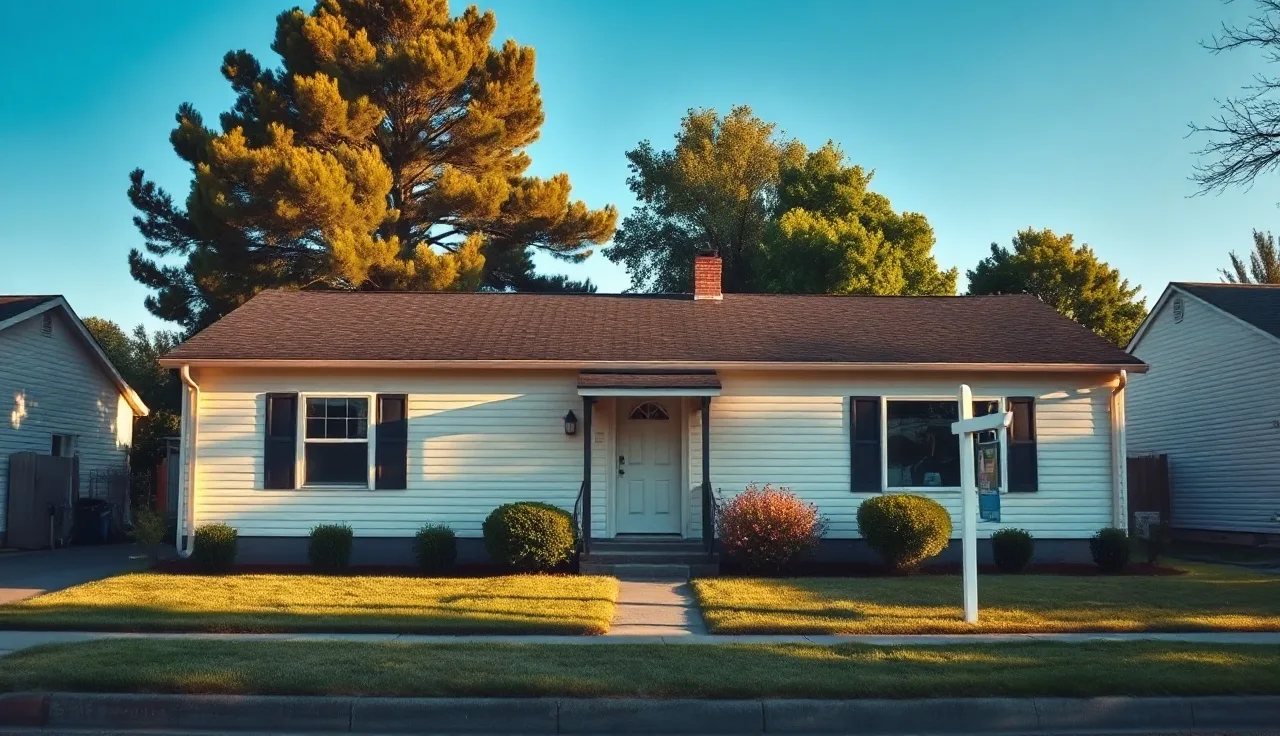
Start with the literal meaning: a HUD-owned single-family home. When a homeowner defaults on an FHA-insured mortgage, HUD pays the lender's insurance claim and takes the property. HUD then sells it through a bidding process run by listing brokers. These are the homes people browse on HUDHomeStore.gov, and they're what real estate investors mean when they say "HUD house." [2]
The broader meaning covers federally assisted rentals: public housing apartments owned by a local housing authority, private units where landlords take Section 8 vouchers, project-based Section 8 contracts tied to specific buildings, and properties financed through HUD's multifamily programs. Tenants and advocates use "HUD housing" to mean any of these.
Getting the category right saves you weeks. The eligibility rules, the application steps, and the day-to-day experience all change depending on which one someone means.
What is a HUD-owned home for sale, and how does buying one work?
A HUD home for sale is a house HUD took back after an FHA-insured borrower defaulted and the foreclosure finished. HUD doesn't keep these homes. It sells them through a sealed-bid process to recoup the insurance payout, and the process has quirks a normal auction doesn't. [2]
Buyers don't bid directly. A licensed, HUD-registered broker submits the offer for you through the HUDHomeStore.gov portal. There's an owner-occupant priority period, usually the first 30 days a home is listed, when only buyers who will live in the home as their primary residence can bid. Investors get their shot after that window closes or if no owner-occupant offer was accepted. [2]
Everything sells as-is. HUD won't make repairs before closing, and it won't cut the price because your inspector found something. The list price comes off an independent appraisal HUD orders, and you can see the appraised value on the listing. HUD often prices below that number to move the property.
You can pay with an FHA loan, a conventional mortgage, or cash. HUD's 203(k) rehabilitation loan rolls the purchase price and renovation costs into a single FHA loan, which helps on distressed properties. [3]
One program is worth knowing about. Good Neighbor Next Door lets eligible teachers, law enforcement officers, firefighters, and EMTs buy HUD homes in designated revitalization areas at a 50% discount off list price, with a three-year residency requirement. [4]
Here's who can bid, and when:
| Bidder Type | When They Can Bid | Notes |
|---|---|---|
| Owner-occupants | Days 1-30 (Extended Listing Period) | Primary residence required |
| Nonprofits / governments | Days 1-30 (same window) | Must be HUD-approved |
| Investors | Day 31+ (if no accepted occupant bid) | No residency restriction |
| Good Neighbor Next Door eligible | Specific listings only | 50% discount, 3-year residency |
Source: HUDHomeStore.gov, HUD program guidelines [2][4]
What is public housing, and who runs it?
Public housing is a separate program where the government is your landlord. HUD funds local Public Housing Authorities (PHAs) to build, own, and manage the units directly, so you rent from the PHA, not from a private owner. Roughly 1.9 million households live in public housing, per HUD data. [5]
Rent runs about 30% of a household's adjusted income, the same basic formula used across most federal housing programs. A family earning $18,000 a year pays roughly $450 a month under that math, and HUD covers the rest of the operating cost to the PHA.
Eligibility turns on income (generally at or below 80% of Area Median Income, though most PHAs prioritize applicants at or below 30% AMI), citizenship or eligible immigration status, and background checks that differ by PHA. You apply directly to your local housing authority, not to HUD. [5]
Waitlists are the hard part. Plenty of PHAs keep their public housing lists closed for years because demand buries supply. If you're looking now, check open Section 8 waiting lists in your area too, since a city's public housing lists and voucher lists can open on totally different schedules.
How does Section 8 / Housing Choice Voucher fit into HUD housing?
The Housing Choice Voucher program, still widely called Section 8, is HUD's largest rental assistance program, and it serves about 2.3 million households. [6] HUD funds local PHAs, PHAs issue vouchers to eligible low-income families, and the voucher holder finds a private rental that meets program standards. The PHA pays the landlord a subsidy directly, and the tenant pays the difference.
Here's the split from public housing that matters most: with a voucher, you rent from a private landlord, not from the housing authority. The unit has to pass an HQS (Housing Quality Standards) inspection before the PHA approves it, and the landlord has to agree to the program's rules and the PHA's payment standard.
HUD sets income limits every year for each metro or county using Area Median Income data. Households generally need to be at or below 50% AMI to qualify. By statute, 75% of new vouchers must go to households at or below 30% AMI (42 U.S.C. § 1437f(o)(4)). [6]
Trying to find a unit? Section 8 houses for rent listings and platforms like Go Section 8 are decent starting points, though supply is tight almost everywhere.
Federal law does not force landlords to accept vouchers. Several states and cities have passed source-of-income protections that change that math. If you're a landlord weighing it, our HUD housing landlord overview walks through the mechanics.
What is project-based Section 8, and how is it different from tenant-based?
Project-based Section 8 (Project-Based Rental Assistance, or PBRA) ties the subsidy to a specific unit or building instead of to a tenant. A private developer or nonprofit signs a long-term Housing Assistance Payments (HAP) contract with HUD. While you live in that unit, you pay 30% of your income toward rent. Leave, and the subsidy stays with the unit. [7]
That detail bites in real life. If you're in a project-based building and want to move, you usually can't take the subsidy with you. A provision lets tenants convert to a tenant-based voucher after 12 months in the unit, but it hinges on the PHA actually having vouchers to give out, and that's the usual bottleneck.
Project-based buildings often look like any other apartment complex from the street. Income limits and application steps vary property to property. You apply directly to the property manager, not to HUD and not always to a PHA. HUD's Multifamily Housing property search shows whether a specific address carries a PBRA contract. [7]
What is HUD Section 202 and Section 811 housing?
Section 202 and Section 811 are two HUD programs built for specific populations, each with its own housing type. Both set rent at roughly 30% of income and both take applications at the property, not through HUD.
Section 202 Supportive Housing for the Elderly funds affordable rental housing for very low-income seniors, age 62 and older. HUD gives capital grants to nonprofit sponsors, and residents typically pay 30% of their income toward rent. There are roughly 6,400 Section 202 properties nationally. [8] If you're searching for low income senior housing, Section 202 is a primary source.
Section 811 Supportive Housing for Persons with Disabilities works the same way for non-elderly adults with significant disabilities. Properties may offer on-site or linked supportive services. Income limits sit at or below 50% AMI, with most units targeted to 30% AMI or below. [8]
The HUD Multifamily Housing database is the cleanest way to find specific properties in either program.
What is Low-Income Housing Tax Credit (LIHTC) housing, and is it a HUD program?
LIHTC (say "lie-tech") is a Treasury/IRS program, not a HUD program, though the two often sit side by side in the same building. The federal government hands tax credits to developers who build or rehab affordable rentals, and those developers sell the credits to investors to raise construction equity. In exchange, they keep rents affordable for income-qualified tenants for at least 30 years. [9]
Many LIHTC properties also carry HUD contracts (project-based vouchers, HOME funding, or Section 8), so the line between "HUD housing" and "LIHTC housing" blurs in practice. From where a tenant sits, the application and rent structure look similar: income limits, rent capped at a percentage of AMI, and a waiting list.
Here's the catch that trips people up. LIHTC rents are set as a percentage of AMI, not as a percentage of your actual income. A tenant earning very little can pay a bigger share of their income than they would in a true HUD-assisted unit. That's a real difference, and it's worth understanding the full picture of low income housing tax credit properties before you apply.
How do you find and apply for HUD housing?
The application path depends entirely on which type you want, so pick your category first.
For HUD homes for sale: go to HUDHomeStore.gov, search by state or ZIP, and get a HUD-registered broker to submit your bid. You cannot bid without one.
For public housing or Housing Choice Vouchers: contact your local PHA. HUD's resource locator at HUD.gov finds PHAs by state. [1] Each PHA runs its own waitlist, sets its own preferences (veterans, homeless applicants, people with disabilities), and opens and closes its list on its own schedule. The housing section 8 program application process gets its own guide.
For project-based Section 8 or Section 202/811 properties: apply directly at the property management office. HUD's Multifamily Housing database lists federally assisted multifamily properties and gives you contact info.
Now the honest part about timing. Voucher waitlists in high-cost cities can run three to seven years, and some PHAs have kept lists closed for a decade. Public housing waits look similar. Project-based and tax credit properties often move faster but still test your patience. Nobody has a clean national average; HUD's Picture of Subsidized Households dataset is the closest thing to real data, and even that doesn't track wait times. [5]
VoucherReady's free waitlist search can flag which PHAs near you have open lists right now, which is usually the first move that matters.
What are the income limits for HUD housing?
HUD publishes income limits every year for every county and metro area in the country, built off Area Median Income (AMI) figures tied to Census Bureau data. The three thresholds that drive everything are 80% AMI (low income), 50% AMI (very low income), and 30% AMI (extremely low income). [10]
Each program leans on a different threshold:
| Program | Income Limit | Statutory Source |
|---|---|---|
| Public Housing (eligibility) | At or below 80% AMI | 42 U.S.C. § 1437a |
| Housing Choice Voucher (eligibility) | At or below 50% AMI | 42 U.S.C. § 1437f(o)(4) |
| HCV (new vouchers, 75% requirement) | At or below 30% AMI | 42 U.S.C. § 1437f(o)(4) |
| Section 202 / Section 811 | At or below 50% AMI (most units at 30%) | 12 U.S.C. § 1701q |
| LIHTC (typical targeting) | 60% AMI or below; some units at 50% or 30% | 26 U.S.C. § 42 |
The dollar figures swing hard by location. A 50% AMI limit for a family of four runs about $30,000 a year in rural Mississippi and tops $90,000 in San Francisco. Look up the current numbers for your area on HUD's income limits page. [10]
What condition are HUD homes for sale usually in?
It varies a lot, and you need to walk in with clear eyes. Some HUD homes are in decent shape, where the last owner kept up the property and the foreclosure was a money problem rather than neglect. Others are wrecked: deferred maintenance, vandalism after the house sat empty, damaged systems, lead paint or mold in older homes.
HUD tags properties as "Insured" (FI) or "Uninsured" (UI) based on whether they can qualify for FHA financing. An Insured property generally needs less than $5,000 in repairs to meet FHA standards. An Uninsured property needs more, and a standard FHA loan usually won't touch it, though an FHA 203(k) rehab loan can. [3]
HUD hires preservation contractors to winterize and secure homes during the sales process. "Secure" means utility shutoffs and board-ups, not renovation. So hire your own licensed inspector before you bid. That inspection runs roughly $300 to $500, and it's yours to pay whether or not you win the bid. Budget for it up front.
Lead paint is a genuine concern in pre-1978 homes. HUD must disclose known lead-based paint hazards under 24 CFR Part 35, a rule that covers any housing getting federal assistance or sold by a federal agency. [11]
What rights do tenants in HUD housing have?
Tenants in federally assisted housing get statutory protections that go past ordinary state landlord-tenant law in a few places.
Rent increases have to follow program rules. In public housing and project-based Section 8, your rent gets recalculated from your income, and any big increase outside that formula requires notice and a grievance process. HUD regulations at 24 CFR Part 966 govern public housing grievance procedures. [12]
Evictions face tighter procedure. A PHA or project-based landlord has to meet HUD's "good cause" standard, which generally means non-payment, lease violations, or criminal activity. The Protecting Tenants at Foreclosure Act (12 U.S.C. § 5220) adds protection when a federally assisted property is sold through foreclosure, including at least 90 days' notice before eviction. [13]
For voucher holders in private rentals, the voucher travels with you when you move and gives you rights under both the PHA's administrative plan and your lease. HUD Handbook 7420.10G covers Housing Choice Voucher administration in detail. [6]
Got a complaint about conditions, management, or discrimination? HUD's Fair Housing and Equal Opportunity office takes complaints, and every PHA must keep a grievance process on file. The Fair Housing Act bars discrimination based on race, color, national origin, religion, sex, familial status, and disability in any federally assisted housing. [1]
Is buying a HUD home a good deal?
Sometimes yes, sometimes no, and the as-is condition is the whole ballgame.
HUD's pricing (independent appraisal, then a list price at or below the appraised value) means you're unlikely to badly overpay at list. Owner-occupant buyers sometimes land accepted bids under list when a property sits. And the 50% Good Neighbor Next Door discount is a real, large benefit for the people who qualify.
The risks are condition and carrying costs. A house that needs $40,000 in repairs is no bargain if you paid market price expecting turnkey. Investors who buy HUD homes profitably budget repair costs hard and close fast, because insurance, utilities, and property taxes start piling up at closing.
The sealed-bid setup hides what you're competing against, which pushes some buyers into overbidding. Lose the bid, and you can resubmit, but you've already burned broker time and maybe an inspection fee.
For a first-time buyer who wants a primary residence and can stomach some renovation, a well-located FI (Insured) home paired with a 203(k) loan can work well. If you want move-in ready with no surprises, this is probably the wrong search.
VoucherReady's landlord kit covers the inspection and compliance side if you're eyeing a HUD home as a rental you'd list to voucher holders.
Frequently asked questions
Can anyone buy a HUD home, or do you have to be low income?
Anyone can buy a HUD home. There are no income restrictions for buyers. The priority bidding window is for owner-occupants, meaning people who will live in the home, not for low-income buyers specifically. The one program with restrictions in the sale context is Good Neighbor Next Door, which limits eligible buyers by profession (teachers, law enforcement, firefighters, EMTs) and gives a 50% discount in exchange for a three-year residency commitment.
What's the difference between a HUD home and a foreclosure?
A HUD home is a specific type of foreclosure: one where the original loan was FHA-insured. HUD pays the lender's insurance claim, takes title, and resells the property through its own process on HUDHomeStore.gov. A standard foreclosure can involve any lender and gets sold through county auctions, bank REO listings, or the MLS. HUD homes carry a distinct bidding process and owner-occupant priority period that most bank-owned foreclosures don't have.
How long does it take to buy a HUD home?
Closing usually takes 30 to 60 days from an accepted bid, about the same as a conventional sale. HUD sets a deadline to close, generally 45 days for FHA financing and 20 days for cash. If financing falls apart, extensions can be granted but aren't guaranteed. The bidding window itself can be just a few days after a listing goes live, so being pre-approved before you bid is essential.
What is HUD's Housing Choice Voucher program in simple terms?
The Housing Choice Voucher program (Section 8) is a federal rental subsidy. HUD funds local housing authorities, which issue vouchers to income-qualified families. The family finds a private rental that passes inspection and fits the program's payment limits. The housing authority pays the landlord most of the rent directly, and the tenant pays roughly 30% of their income as their share. About 2.3 million households use vouchers nationally.
Do HUD homes come with appliances?
Usually not, though it varies by property. When HUD takes possession, any appliances left behind may or may not work. HUD doesn't furnish or equip properties before sale. The HUDHomeStore.gov listing notes the condition category (Insured or Uninsured), but the only way to know exactly what's included is a walk-through inspection before you bid. Never assume appliances work without checking them yourself.
Can I rent out a HUD home I bought?
If you bought as an owner-occupant, you generally have to live in the property as your primary residence for a set time, typically one year for standard sales and three years for Good Neighbor Next Door. Breaking the occupancy requirement can trigger recourse from HUD. After that period, you can rent it out. If you bought as an investor during the open investor bidding period, there's no occupancy restriction at all.
What is the difference between public housing and Section 8?
Public housing means the housing authority owns and manages the building, so you rent directly from a government agency. Section 8 (Housing Choice Vouchers) means you rent a private unit and a government subsidy pays part of your rent to a private landlord. Both are HUD-funded with income-based rents, but they run differently. Public housing has no portability. A voucher can move with you to a new city through a process called portability.
Are HUD homes sold as-is? Can you negotiate repairs?
Yes, HUD homes sell strictly as-is. HUD won't make repairs before or after closing, and it won't drop the price over inspection findings. Buyers can set up a repair escrow in limited cases through programs like the FHA 203(k) loan, but that's a financing tool you arrange, not a negotiation with HUD. Your only real lever is the bid price itself, and even then you're bidding blind in a sealed process.
What happens if a HUD-assisted building is sold or loses its subsidy contract?
Federal protections kick in. The Protecting Tenants at Foreclosure Act (12 U.S.C. § 5220) requires at least 90 days' notice before eviction when a federally assisted property is sold through foreclosure. For project-based Section 8 buildings, HUD requires enhanced vouchers or relocation help when an owner opts out of a HAP contract, under 42 U.S.C. § 1437f(c)(8). Contact your local legal aid office fast if you get a notice.
Is there a HUD housing program specifically for seniors?
Yes. Section 202 Supportive Housing for the Elderly is HUD's dedicated program for very low-income adults 62 and older. HUD gives capital grants to nonprofit developers who build and run the properties. Residents pay about 30% of their income toward rent. There are roughly 6,400 Section 202 properties nationwide. Applications go straight to individual properties, not to HUD centrally. Senior-targeted public housing units also exist within the general public housing stock.
Can a landlord refuse to accept a Section 8 voucher?
Under federal law, yes, landlords can refuse vouchers. The Fair Housing Act does not list source of income as a protected class federally. But about 16 states and dozens of cities have passed source-of-income protection laws that ban refusing vouchers. Whether a refusal is legal depends entirely on where the property sits. Before you assume a landlord can say no, check your state and local laws.
What inspection does a HUD home need to pass for an FHA loan?
FHA appraisers check for safety, soundness, and security. They flag things like exposed wiring, missing handrails, peeling paint in pre-1978 homes, roof damage, dead HVAC, and inadequate water heaters. HUD classifies homes that can meet these standards with under $5,000 in repairs as "Insured" (FI). Others are "Uninsured" (UI) and usually can't be bought with a standard FHA loan. A 203(k) rehab loan can bridge the gap on Uninsured properties.
How do I find HUD housing in my area?
For HUD homes for sale, search HUDHomeStore.gov by ZIP or state. For public housing or vouchers, use HUD's resource locator at HUD.gov to find your local housing authority and check its current waitlist status. For project-based multifamily housing (Section 202, project-based Section 8), search HUD's Multifamily Housing database at HUD.gov. Each program has a separate application path, so start by naming which one you need.
Sources
- HUD.gov, HUD Programs and Services overview: HUD administers multiple housing assistance programs including public housing, vouchers, and multifamily housing; HUD resource locator available for finding local PHAs
- HUDHomeStore.gov, Buying a HUD Home: HUD sells FHA-foreclosed single-family homes through a sealed-bid process with a 30-day owner-occupant priority window; sales managed by HUD-registered brokers
- HUD.gov, FHA 203(k) Rehabilitation Mortgage Insurance: FHA 203(k) loans roll purchase price and renovation costs into one loan; properties requiring more than $5,000 in repairs to meet FHA standards classified as Uninsured
- HUD.gov, Good Neighbor Next Door program: Good Neighbor Next Door offers a 50% discount off list price to eligible teachers, law enforcement officers, firefighters, and EMTs, with a three-year residency requirement
- HUD.gov, Picture of Subsidized Households: Roughly 1.9 million households live in public housing; HUD's Picture of Subsidized Households dataset is the primary national data source but does not track wait times
- HUD.gov, Housing Choice Voucher Program (Section 8): The Housing Choice Voucher program serves approximately 2.3 million households; 75% of new vouchers must go to households at or below 30% AMI per 42 U.S.C. § 1437f(o)(4)
- HUD.gov, Multifamily Housing / Project-Based Rental Assistance: Project-Based Rental Assistance ties the subsidy to a specific unit via a long-term HAP contract; HUD's Multifamily Housing property search shows PBRA contracts by address
- HUD.gov, Section 202 Supportive Housing for the Elderly: Approximately 6,400 Section 202 properties serve very low-income seniors aged 62 and older; residents pay approximately 30% of income toward rent; Section 811 serves non-elderly adults with disabilities
- IRS.gov, Low-Income Housing Tax Credit (26 U.S.C. § 42): LIHTC is a Treasury/IRS program that provides tax credits to developers of affordable rental housing in exchange for keeping rents affordable for at least 30 years
- HUD.gov, Income Limits (HUD USER): HUD publishes annual income limits by county and metro area at 80%, 50%, and 30% AMI thresholds; dollar amounts vary substantially by geography
- HUD.gov, Lead-Based Paint Regulations, 24 CFR Part 35: 24 CFR Part 35 requires disclosure of known lead-based paint hazards in pre-1978 federally assisted housing and housing sold by federal agencies including HUD
- HUD.gov, Public Housing Grievance Procedures, 24 CFR Part 966: 24 CFR Part 966 governs public housing grievance procedures and lease requirements, including notice for rent changes
- Consumer Financial Protection Bureau, Protecting Tenants at Foreclosure Act: The Protecting Tenants at Foreclosure Act (12 U.S.C. § 5220) requires at least 90 days' notice before eviction when a federally assisted property is sold through foreclosure