Last updated 2026-07-09
TL;DR
New Jersey has no single statewide Section 8 application. You apply separately to each local Public Housing Authority (PHA) whose waitlist is open. The state also runs its own voucher, the State Rental Assistance Program (SRAP), through the DCA. Income limits sit at 50% of Area Median Income, but 75% of new vouchers must go to households at or below 30% AMI. Most NJ waitlists stay closed for years at a time.
What is Section 8 in New Jersey and who runs it?
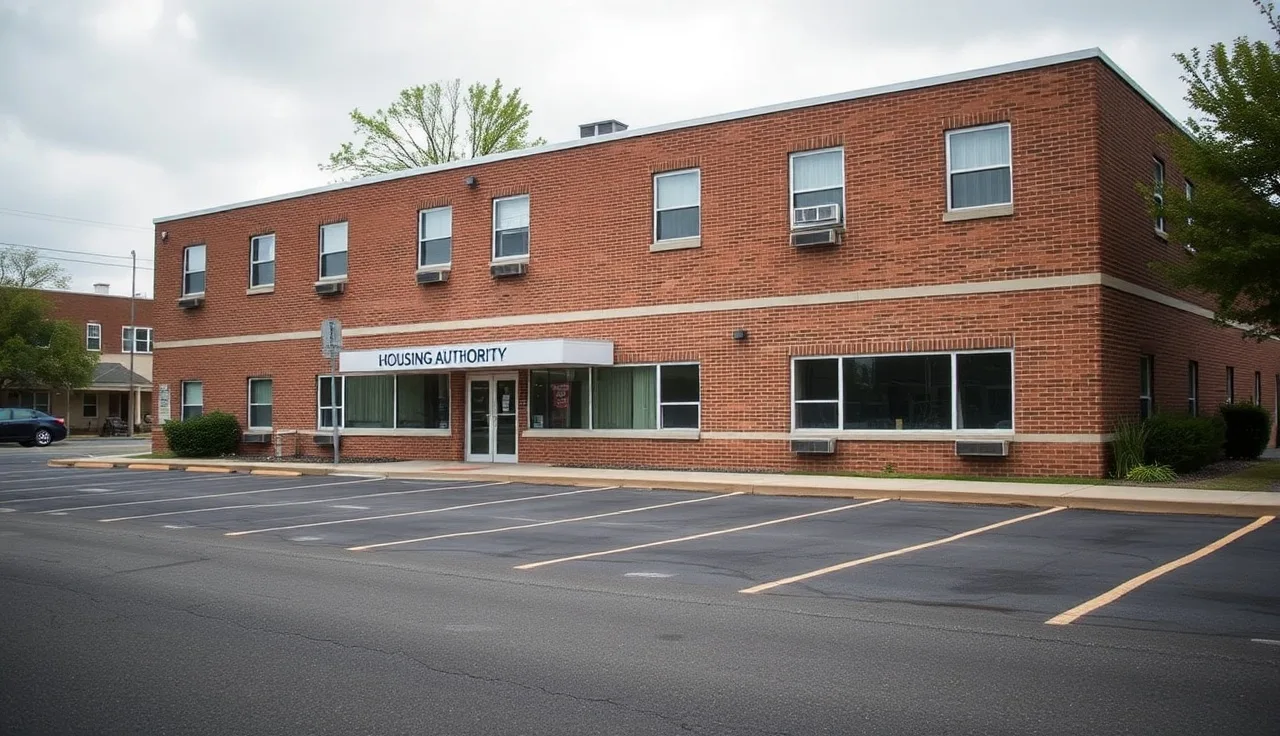
Section 8, formally the Housing Choice Voucher (HCV) program, is a federal rental subsidy funded by HUD and run locally by Public Housing Authorities (PHAs). New Jersey has two parallel systems. One is the state program run by the New Jersey Department of Community Affairs (DCA), Division of Housing and Community Resources. The other is a set of roughly 50-plus independent local PHAs covering individual cities and counties, from Newark to Atlantic City to Bergen County. [1]
The DCA program is the State Rental Assistance Program (SRAP). It works like the federal HCV program but draws on state-appropriated money on top of federal dollars, which gives New Jersey a little more room on some payment standards. SRAP runs through the DCA's Section 8 contract administrators. The application process, the eligibility rules, and the inspection requirements match the federal program almost exactly. [2]
Local PHAs are their own agencies. Newark's housing authority and Camden's housing authority each set their own waitlist opening dates, their own preferences, and their own local payment standards inside HUD's rules. That independence is the reason there's no single 'state of NJ Section 8 application' covering every county. You track each PHA on its own.
Want the basics first? The section 8 meaning explainer covers what the voucher actually pays, how the subsidy gets calculated, and what tenants and landlords each owe.
Am I eligible to apply for Section 8 in New Jersey?
Federal law sets the floor, and New Jersey PHAs work inside it. Here are the boxes you need to check.
Citizenship or immigration status. At least one household member must be a U.S. citizen or have eligible immigration status as defined in 24 CFR Part 5, Subpart E. Mixed-status households can still apply. The subsidy gets prorated to the eligible members. [3]
Income limits. Your gross annual household income has to be at or below 50% of the Area Median Income (AMI) for your area. HUD publishes these limits every year. For 2024, the 50% AMI limit in the Newark-Jersey City HUD Metro area was $56,350 for a family of four, but limits swing hard by county. [4] Federal law also requires that at least 75% of new vouchers each year go to households at or below 30% AMI, the 'extremely low income' threshold. In practice, most people who actually get a voucher sit well below the 50% line.
Background screening. PHAs must deny anyone subject to a lifetime sex offender registration requirement in any state. They have discretion to deny applicants with recent drug-related or violent convictions, evictions from assisted housing for drug activity within the past three years, or unpaid balances owed to a PHA. Each agency publishes its own Admissions and Continued Occupancy Policy (ACOP), and those policies differ.
Social Security Numbers. Every household member you're claiming assistance for has to provide an SSN, or document an exception under 24 CFR 5.216.
Age doesn't matter. You can be 18 or 85. Single adults qualify. You don't need children, and you don't need to be homeless, though some PHAs hand out preference points to people who are.
How do you actually apply for Section 8 in New Jersey?
Step one is finding out which waitlists are open right now. That step alone stops most people. Most NJ PHAs keep their waitlists closed because demand runs far past supply. When a waitlist does open, it usually stays open for a short window, sometimes just days, before the PHA collects enough applications and shuts it again.
Here's the working process:
1. Check waitlist status. The DCA keeps a list of the PHAs it contracts with, but for local waitlist status you have to call each PHA directly or check its website. The NJ DCA housing page is a starting point [2], but real-time openings aren't gathered in one place. Signing up for email alerts through local PHA websites is the most reliable move.
2. Complete the application when a waitlist opens. Most NJ PHAs now take online applications through their own portals or common platforms like GoSection8. Some still take paper applications at their offices during the open period. The application asks for names, dates of birth, and SSNs for every household member; income sources and amounts; current address and landlord contact; and any preferences you qualify for (veteran, homeless, disabled, local resident).
3. Get a confirmation number. Keep it. That's how you check your spot on the waitlist later. Losing it doesn't disqualify you, but getting it back means a call to the PHA.
4. Wait, and update your contact information. This is the step people fail most. If the PHA mails a letter to an old address and you don't answer inside the deadline (often 10 days), they cut you from the waitlist. Update your address and phone number in writing every single time you move.
5. Show up for the eligibility interview. When your name nears the top, the PHA schedules an in-person or phone interview to verify everything on your application. Bring original documents: birth certificates, Social Security cards, proof of income (pay stubs, tax returns, benefit award letters), and photo ID.
6. Pass the eligibility determination. The PHA reviews your file, runs background checks, and makes a formal decision. If you're approved, you get a voucher with an expiration date (usually 60 to 120 days) to find a unit.
For a wider look at how waitlists work around the country, see section 8 housing list.
Which New Jersey PHAs currently have open waitlists?
This changes constantly, so no article can hand you a live answer. What I can give you is the landscape as of mid-2026 and how to verify it yourself.
New Jersey has these major housing authorities, each with its own waitlist:
| PHA | County | Notes |
|---|---|---|
| NJ DCA / SRAP | Statewide | Waitlist historically very long; check dca.nj.gov |
| Newark Housing Authority | Essex | One of the largest in the state; waitlist typically closed |
| Jersey City Housing Authority | Hudson | Periodically opens online |
| Camden County Housing Authority | Camden | Serves Camden County municipalities |
| Atlantic City Housing Authority | Atlantic | Smaller program; check site directly |
| Passaic County Housing Authority | Passaic | Covers county residents |
| Bergen County Housing Authority | Bergen | Opens occasionally for brief windows |
| Trenton Housing Authority | Mercer | City-specific |
| Elizabeth Housing Authority | Union | City-specific |
| Paterson Housing Authority | Passaic | City-specific |
To check current status, go straight to the PHA's website or call its main number. The HUD resource locator at hud.gov gives you phone numbers for every NJ PHA. [5]
One honest note. Nobody has good real-time data on which NJ waitlists are open at any given moment. Even the DCA's own contact list can lag. Calling the PHA directly still beats everything else.
For a sense of what applicants face in other high-demand metros, section 8 nyc shows how New York City handles its separate system just across the river.
How long is the wait for a Section 8 voucher in New Jersey?
Long. Genuinely long. HUD's Picture of Subsidized Households data, the most current systematic source, shows many New Jersey PHAs with waitlists measured in years, not months. The Newark Housing Authority has historically reported wait times of 5 to 8 years for new applicants. [6] Smaller county-level PHAs can move faster, but 'faster' still usually means 2 to 4 years.
The DCA SRAP program has had stretches where the waitlist was effectively frozen for years because of state funding constraints.
Why so long? New Jersey is one of the most expensive rental markets in the country. HUD allocates vouchers on a formula tied to existing assisted households, not to local demand. NJ's voucher program serves roughly 40,000 to 45,000 households statewide, while HUD estimates the number of income-eligible renters who need help runs many times higher. [1]
Preferences shorten the line. Almost every NJ PHA gives priority points to current county or city residents, veterans, people experiencing homelessness, and people with disabilities. Documenting your preference eligibility at application time is not optional. It's the difference between waiting 3 years and waiting 7.
While you wait, look at other options. Rental assistance in NJ covers state programs without the same wait, including Emergency Rental Assistance, the Work First New Jersey program, and local nonprofit funds. And low income housing with no waiting list explains what actually exists in that category.
What income limits apply to the NJ Section 8 program in 2024-2025?
HUD publishes income limits every year, usually in April or May. The limits track Area Median Income (AMI) for each HUD Metropolitan Statistical Area or non-metropolitan county. New Jersey spans multiple HUD areas, so the numbers change by location.
Here are the 2024 Very Low Income (50% AMI) limits for the most common NJ HUD areas, for a family of four: [4]
| HUD Area | 30% AMI (4-person) | 50% AMI (4-person) | 80% AMI (4-person) |
|---|---|---|---|
| Newark-Jersey City HMFA | $33,800 | $56,350 | $90,150 |
| Monmouth-Ocean HMFA | $34,200 | $57,000 | $91,200 |
| Trenton MSA | $30,850 | $51,400 | $82,250 |
| Atlantic City-Hammonton | $26,950 | $44,900 | $71,850 |
| Camden, NJ (Philadelphia area) | $30,100 | $50,150 | $80,250 |
These numbers shift every year. Verify against the current HUD Income Limits page at huduser.gov before you decide you're ineligible.
The 30% AMI column matters because federal law (42 U.S.C. 1437n) requires PHAs to target 75% of new vouchers to households at or below that threshold. So even if you qualify at 50% AMI, you may wait longer than someone at 30% AMI. [7]
Household size moves the limits a lot. A single person's limit runs roughly 70% of the four-person limit; an eight-person household can hit 130% or more. Use the HUD limits tool with your actual household size.
What happens after you submit the NJ Section 8 application?
You wait, and you keep your contact information current. That's most of it, honestly.
The PHA sends confirmation that you're on the waitlist. With online applications, that's often instant. Otherwise a letter shows up within a few weeks. Your position on the list runs off your application date plus any preference points you qualified for.
HUD requires PHAs to run periodic purges of their waitlists to confirm applicants are still interested and still reachable. So you'll get a letter or email asking you to confirm you still want assistance. Miss it and you're off the list. There's no appeal on the grounds that you didn't get the mail. Keep the PHA updated.
When your turn comes, the PHA mails an appointment notice for an eligibility interview. There they verify income, household composition, and immigration status, and run criminal background checks. Pass, and you get a voucher.
The voucher has an expiration date, usually 60 days with a possible 60-day extension at the PHA's discretion under 24 CFR 982.303. [8] Inside that time you have to find a landlord willing to take the voucher, in a unit that passes HUD inspection and lands within the PHA's payment standard. In competitive NJ markets that 60-day window is tight. Start looking before the voucher even arrives if you can.
VoucherReady's tenant tools help you track deadlines and document your search if your PHA allows extension requests based on documented search effort.
Can you apply for Section 8 online in New Jersey?
Yes, though not every PHA offers online applications and availability changes as waitlists open and close.
The DCA SRAP program has used online application portals during open enrollment periods. Local PHAs vary. Jersey City, Newark, and Bergen County have all offered online applications in recent open periods. Smaller PHAs sometimes still require paper applications submitted in person or by mail during the open window.
When a waitlist opens online, the application period can close within 24 to 72 hours once the PHA hits its target number of applications. Being prepared before the opening is the whole game. Have your documents ready: SSNs, income documentation, birth certificates, and any supporting paperwork for preferences like veteran status or disability verification.
There is no permanent open portal where you can submit a 'state of New Jersey Section 8 application' any time of year. If a website says it'll let you apply for Section 8 for a fee, it's a scam. HUD assistance applications are always free. [9]
Setting Google Alerts for '[PHA name] waitlist open' or '[PHA name] Section 8 application' is a reasonable way to catch openings fast, but following the PHA on social media and joining its mailing list beats that.
Do NJ landlords have to accept Section 8 vouchers?
In New Jersey, yes. The New Jersey Law Against Discrimination (NJLAD) was amended effective January 1, 2022 to add 'source of lawful income' as a protected class. A landlord can't refuse to rent to a tenant, apply different terms, or discriminate in advertising just because the tenant pays with a Section 8 voucher. [10]
That's a real difference from most other states. Where there's no source-of-income protection, landlords can freely turn down vouchers, and plenty do. In New Jersey, refusing a voucher-holding tenant is unlawful unless the landlord has a legitimate, non-discriminatory reason unrelated to the voucher itself (credit score, rental history, income-to-rent ratio based on the tenant's portion, and so on).
The law covers residential landlords of every size. It reaches the individual homeowner renting a single unit, not only the large property management companies.
Landlords who take vouchers have to pass HUD's Housing Quality Standards inspection, agree to the PHA's rent reasonableness determination, and sign a Housing Assistance Payments (HAP) contract. The inspection and paperwork take time. The guaranteed monthly payment from the PHA is the payoff. For landlords weighing how to participate, rental assistance nj covers what the process looks like on your end.
VoucherReady's landlord kit walks through the HAP contract, inspection prep, and rent reasonableness documentation in one place.
What are the NJ Section 8 payment standards and how much will the voucher cover?
Payment standards are the ceiling on what a PHA will pay toward rent and utilities. Each PHA sets its own within HUD's Fair Market Rent (FMR) guidelines, typically between 90% and 110% of the published FMR, with HUD approval up to 120% in high-cost areas. [11]
HUD publishes Fair Market Rents every year for every area in the country. New Jersey's FY2025 FMRs are among the highest in the nation. For context:
| HUD Area | 0-BR FMR | 1-BR FMR | 2-BR FMR | 3-BR FMR |
|---|---|---|---|---|
| Newark-Jersey City HMFA | $1,619 | $1,897 | $2,344 | $3,074 |
| Monmouth-Ocean HMFA | $1,387 | $1,634 | $2,052 | $2,620 |
| Atlantic City-Hammonton | $1,024 | $1,218 | $1,511 | $1,914 |
| Trenton MSA | $1,254 | $1,486 | $1,865 | $2,374 |
The tenant pays roughly 30% of adjusted monthly income toward rent. The voucher covers the gap between that amount and the payment standard (or the actual rent, whichever is lower). If a landlord's rent runs past the payment standard, the tenant can make up the difference only if their total contribution stays under 40% of monthly adjusted income at initial lease-up. [8]
Higher-cost PHAs can get HUD approval to set payment standards above the standard FMR. Ask the specific PHA for its current payment standard schedule before you start looking for a unit.
What documents do you need for a New Jersey Section 8 application?
Document requirements shift a little by PHA, but the core list holds across all NJ programs.
For the application itself at waitlist opening, most PHAs ask only for basic identifying information. The heavy document collection comes at the eligibility interview, when your name reaches the top.
Bring originals (and copies) of:
- Photo ID for every adult household member (driver's license, state ID, passport)
- Birth certificates for all household members
- Social Security cards for all household members
- Proof of income for every source: last 30 days of pay stubs, most recent tax return, Social Security or SSI award letters, TANF benefit letters, child support orders
- Bank statements (last 2 to 3 months) for all accounts
- Proof of current address (lease, utility bill)
- Documentation of any preference claimed: DD-214 for veterans, disability verification letter, proof of homelessness from a shelter or outreach worker
- If any household member was previously in assisted housing, details about that tenancy
Bring more paperwork than you think you need. PHAs can verify income in real time through HUD's Enterprise Income Verification (EIV) system [9], which cross-checks SSA and HHS data, but your own paper trail heads off delays when there are discrepancies.
Can you transfer a Section 8 voucher from another state to New Jersey?
Yes. It's called portability, and it's a federal right under 24 CFR 982.353. Once you've been on a voucher for at least 12 months (or you have an exception like fleeing domestic violence), you can request to port your voucher to any jurisdiction in New Jersey. [8]
Here's the mechanics. You tell your current PHA (the 'initial PHA') you want to move to New Jersey. They contact the receiving PHA in NJ. The receiving PHA either absorbs your voucher into its own program or bills your initial PHA. Once you move, you're under the receiving PHA's payment standards and inspection requirements.
Portability into high-cost NJ markets can get tricky, because your voucher's funding level may have been set off a lower-cost area. The receiving PHA sets the payment standard, not the initial PHA, so your subsidy may not stretch as far as you expect in, say, Bergen County.
NJ to NJ portability exists too. Say you have a voucher from Atlantic City and want to move to Princeton. You contact the initial PHA and request a transfer to the Princeton Housing Authority.
One common misconception: you can't port a voucher you're only on the waitlist for. You need an active, issued voucher first.
Frequently asked questions
Is there one statewide Section 8 application for New Jersey?
No. New Jersey has no single centralized application for Section 8. The DCA runs its own SRAP voucher program at the state level, but each of the 50-plus local Public Housing Authorities in NJ runs a separate waitlist with its own application process. You may need to apply to several PHAs to raise your chances of getting a voucher.
How do I know if the NJ DCA Section 8 waitlist is open?
Go straight to the NJ Department of Community Affairs website at dca.nj.gov and find the Division of Housing and Community Resources section. The DCA announces waitlist openings through its website and sometimes through community outreach. You can also call the DCA housing hotline. There's no reliable third-party aggregator for this, so primary sources are your best bet.
What is the income limit for Section 8 in New Jersey?
The standard eligibility limit is 50% of Area Median Income for your HUD area. For a family of four in the Newark-Jersey City area, that was $56,350 in 2024. But 75% of new vouchers must go to households at 30% AMI or below, which was $33,800 for a four-person household in that same area. Check HUD's current income limits at huduser.gov because they change every year.
How long does it take to get a Section 8 voucher in New Jersey?
Most NJ applicants wait years, not months. Major PHAs like Newark have reported wait times of 5 to 8 years historically. Smaller county PHAs may move faster, but 2 to 4 years is a reasonable baseline. Qualifying for local preferences like veteran status, homelessness, or disability can shorten your wait a lot by moving you up the queue.
Can a landlord in New Jersey refuse to accept a Section 8 voucher?
No. New Jersey's Law Against Discrimination was amended effective January 1, 2022 to ban discrimination based on 'source of lawful income,' which includes Section 8 vouchers. A landlord who refuses to rent to a qualified tenant just because they have a voucher is breaking state law. Tenants can file a complaint with the NJ Division on Civil Rights.
Can I apply for Section 8 in NJ online?
Some NJ PHAs offer online applications when their waitlists open. The DCA SRAP program has used online portals for open enrollment periods. But not every PHA offers online applications, and no permanent online portal accepts applications year-round. When a waitlist opens online, it can close within 24 to 72 hours. Have your documents ready so you can apply fast. Never pay a fee to apply; it's always free.
What happens if I miss a letter from the PHA while I'm on the waitlist?
You can be removed from the waitlist. PHAs periodically send letters or emails to confirm you're still interested and reachable. If you don't respond inside the deadline (often 10 days), most PHAs remove you without further notice. Update your mailing address, email, and phone number with the PHA every time they change. This is one of the most common reasons people lose their spot.
Can I apply to more than one NJ housing authority at the same time?
Yes. There's no rule against applying to multiple PHAs at once. Applying to every PHA with an open waitlist in areas where you'd actually live is a smart strategy. Just keep all applications current and respond to each PHA promptly if your name comes up. Getting a voucher from one PHA does not automatically remove you from another's list.
Do I have to live in a New Jersey city to apply to its housing authority?
Not always, but residency preferences are common. Many NJ PHAs give preference points to current residents of their jurisdiction. You can usually still apply even if you live elsewhere, but you'll rank lower than local applicants. Some PHAs have waiting periods before non-residents can apply at all. Check each PHA's admissions policy, published in its Administrative Plan or ACOP.
What is the difference between Section 8 and SRAP in New Jersey?
Section 8 (Housing Choice Vouchers) is a federal program funded by HUD and run by local PHAs. SRAP is New Jersey's State Rental Assistance Program, run by the DCA using state-appropriated funds alongside federal dollars. SRAP follows the same income limits, inspection standards, and subsidy structure as federal HCV. Both produce a voucher you use the same way; the funding source is the main difference.
Can I move from another state to New Jersey using my existing Section 8 voucher?
Yes, through portability, if you've had your voucher for at least 12 months (with some exceptions). You notify your current PHA, they contact the receiving NJ PHA, and you move under the receiving PHA's payment standards. Be aware that NJ's high rents mean your voucher may cover less here than in your home state, since payment standards are set by the receiving PHA.
What criminal history will disqualify me from Section 8 in NJ?
Federal law requires PHAs to deny applicants on lifetime sex offender registries. Beyond that, PHAs have discretion. Common grounds for denial include drug-related felony convictions within the past 3 to 5 years, violent criminal history, and prior eviction from assisted housing for drug activity within 3 years. Each PHA's ACOP (Admissions and Continued Occupancy Policy) spells out its own rules; request a copy from the PHA.
How much rent will Section 8 cover in New Jersey?
The voucher covers the difference between your contribution (roughly 30% of your adjusted monthly income) and the PHA's payment standard, up to the actual rent. Payment standards in NJ track HUD's Fair Market Rents, which for FY2025 run from around $1,024 a month for a studio in Atlantic City to over $3,074 for a three-bedroom in the Newark-Jersey City metro. Ask your specific PHA for its current payment standard schedule.
Are there Section 8 programs in NJ specifically for seniors or people with disabilities?
Yes. HUD's Section 811 Supportive Housing for Persons with Disabilities program funds rental assistance for very low-income adults with disabilities, administered through agreements with state housing agencies. New Jersey also runs the Special Needs Housing program through the DCA. These programs have their own eligibility criteria and separate applications from the general HCV waitlist. Contact the DCA or a local disability services organization for current availability.
Sources
- HUD, Office of Public and Indian Housing, New Jersey PHA directory: New Jersey has multiple local PHAs plus the DCA state-level program, each administering its own waitlist and voucher program.
- NJ Department of Community Affairs, Housing and Community Resources: New Jersey's DCA administers the State Rental Assistance Program (SRAP) using state-appropriated and federal HUD funds.
- Code of Federal Regulations, 24 CFR Part 5, Subpart E, Restrictions on Assistance to Noncitizens: At least one household member must be a U.S. citizen or have eligible immigration status; mixed-status households receive prorated assistance.
- HUD Office of Policy Development and Research, FY2024 Income Limits: 2024 Very Low Income (50% AMI) limit for a family of four in the Newark-Jersey City HMFA was $56,350; 30% AMI was $33,800.
- HUD, PHA Contact Information: HUD maintains a searchable directory of all NJ PHAs with phone numbers and addresses.
- HUD, Picture of Subsidized Households: HUD's Picture of Subsidized Households database tracks voucher utilization and waitlist conditions by PHA, showing demand far exceeding supply in NJ.
- U.S. Code, 42 U.S.C. 1437n, Targeting of Assistance: Federal law requires that at least 75% of new vouchers each fiscal year be issued to households at or below 30% of AMI.
- Code of Federal Regulations, 24 CFR Part 982, Section 8 Tenant-Based Assistance: Voucher search terms are 60 days with possible 60-day extension; at initial lease-up tenant share cannot exceed 40% of monthly adjusted income; portability rights described in 982.353.
- New Jersey Division on Civil Rights, Law Against Discrimination: The NJLAD was amended effective January 1, 2022, adding 'source of lawful income' (including Section 8 vouchers) as a protected class, prohibiting landlord refusal.
- HUD, Fair Market Rents: FY2025 FMRs in NJ range from $1,024 (Atlantic City studio) to $3,074 (Newark-Jersey City 3-bedroom), among the highest in the nation; payment standards run 90% to 120% of FMR.