Last updated 2026-07-11
TL;DR
A window fails a Section 8 Housing Quality Standards (HQS) inspection if it poses a safety hazard or leaves the unit open to weather or intruders. The most common failures are cracked or broken glass, inoperable locks on accessible windows, missing screens in warm months, windows painted or nailed shut, and rotted frames that let weather in. HUD's rules live at 24 CFR 982.401.
What are the Section 8 window rules and where do they come from?
The legal basis is 24 CFR 982.401, HUD's Housing Quality Standards for the Housing Choice Voucher program. That regulation sets the minimum conditions every unit has to meet before a housing authority pays a single dollar of rent. Windows show up under at least three separate HQS categories: structure and materials (982.401(d)), security (982.401(l)), and thermal environment and weathertightness (982.401(f)). [1]
HQS is not a building code. It does not require windows to be new or attractive. It requires that they work, that they keep the weather out, and that they don't put occupants at risk. A 40-year-old wood window that opens, closes, latches, and has no broken glass passes. A brand-new window painted shut fails.
Each housing authority runs its own inspection program, and many add local standards on top of the federal floor. So the list below reflects the federal HQS minimum. Your specific PHA may be stricter, especially for screens or storm windows in cold climates. Always ask your inspector for the local addendum if one exists.
HUD's Housing Choice Voucher program serves roughly 2.3 million households as of HUD's 2023 reporting. [2] Every one of those units had to clear an HQS window check at some point. Getting windows right is basic prep, not an afterthought.
What specific window conditions cause an HQS inspection failure?
Here is the practical list, drawn from HUD's HQS inspection checklist and the underlying regulation at 24 CFR 982.401. [1][3]
Broken or cracked glass. Any window with a crack, hole, or missing pane fails. Full stop. Even a small star crack counts because it creates a laceration hazard. The inspector does not judge severity; any visible break is a deficiency.
Inoperable sash or frame. If a window that is supposed to open cannot open, or cannot stay open without propping, it fails the operability check. This matters most for windows designated as emergency egress.
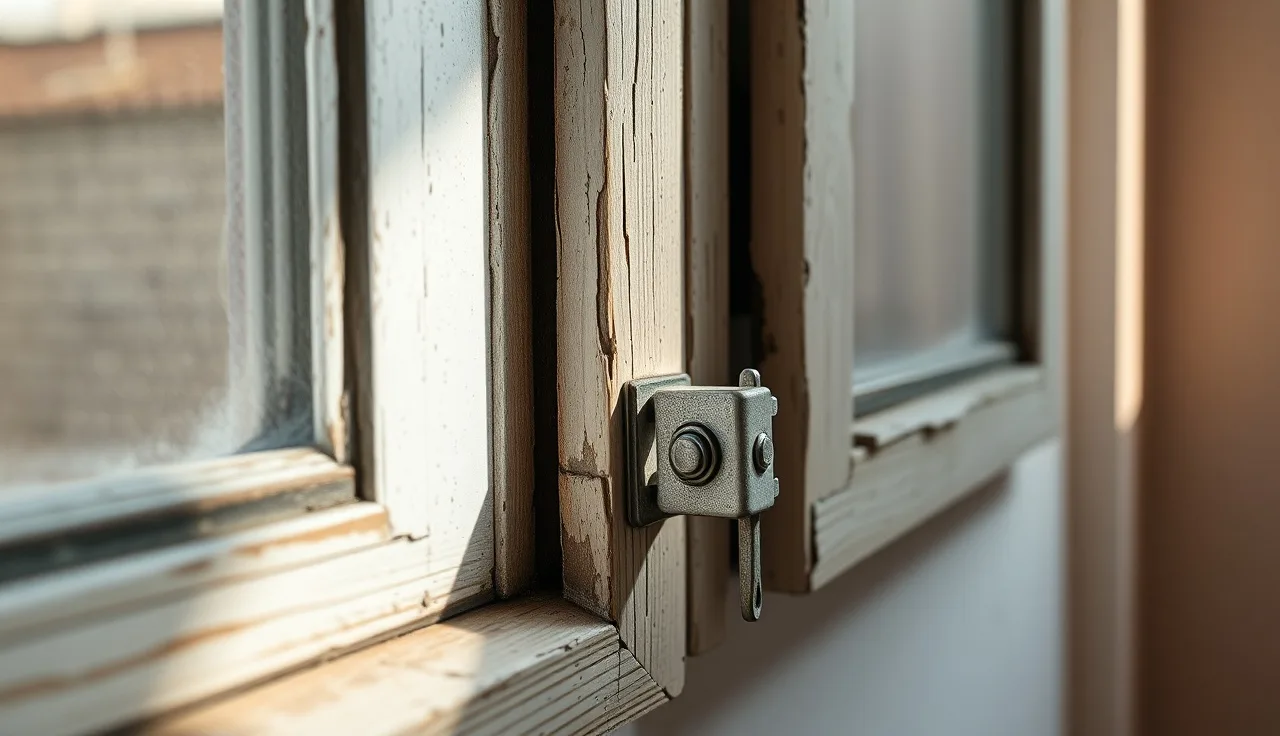
No lock or latch on an accessible window. Ground-floor windows and any window reachable from a fire escape, balcony, or adjacent structure must have a working lock. A window that cannot be secured from the inside is a security failure under 982.401(l). [1]
Window painted or nailed shut. This is one of the most common landlord surprises. A window that has been permanently sealed fails on two counts: operability and, if it is on a required egress path, life safety.
Deteriorated or missing glazing compound (putty). If the glazing compound around the pane is so degraded that the glass is loose or rattles freely, it fails. This is also a lead paint trigger in pre-1978 housing because disturbed glazing compound on old windows often contains lead. [4]
Frames with holes, rot, or gaps that let weather in. The frame has to keep air and moisture out. A rotted sill, a gap around the frame, or missing weatherstripping that causes a draft is a weathertightness failure.
Missing or damaged window screens (where required). HQS requires screens on openable windows from roughly April 1 through October 31, or whenever the local climate makes insects a health concern. [3] The screen must be intact; large tears or holes are a deficiency.
Broken or missing hardware. Broken cranks on casement windows, missing sash lifts, or a double-hung window with broken balance springs that lets the sash slam down all count as operability defects.
Window unit that is a security risk. A basement window with a well that floods and no egress cover, or a window opening so large or unguarded that a small child could fall through, can fail under the HQS safety provisions.
Peeling lead paint on window surfaces. In pre-1978 units, friction surfaces like window sills, stops, and channels get extra scrutiny under HUD's lead paint rule (24 CFR Part 35). Chipping or peeling paint on those surfaces is an independent failure even if the window itself works fine. [4]
Which window defects are "life-threatening" vs. standard repairs?
HUD and most PHAs sort HQS failures into two tiers: life-threatening (or emergency) deficiencies and standard deficiencies. The tier sets how long the landlord has to fix the problem before the housing authority suspends or terminates the housing assistance payment. [5]
Life-threatening window defects usually include a window that is the sole emergency egress from a sleeping room and cannot be opened, broken glass severe enough to pose an immediate laceration or fall risk, and a window opening that leaves a small child exposed to a fall hazard (this sometimes triggers a 24-hour correction deadline).
Standard deficiencies, like a missing screen, a broken latch on a non-accessible window, or a small area of deteriorated glazing compound, usually get a 30-day correction window. Some PHAs extend to 60 days for major structural repairs. Ask your PHA for their timeline schedule because they vary.
HUD's inspection procedures put it plainly: owners must correct life-threatening deficiencies within 24 hours. That is not a soft guideline. Miss it and the HAP contract pauses. [5]
If you're a landlord trying to guess whether a window defect gets flagged as life-threatening, use this proxy: could someone be trapped, cut, or fall as a direct result? If yes, treat it as a 24-hour item no matter what your PHA says, and fix it before the inspector shows up.
Do Section 8 inspections require window screens?
Yes, with conditions. HQS requires window screens on all openable windows during the insect season for that climate zone. [3] Across most of the continental U.S., PHAs read that as roughly April through October, though Phoenix inspectors want them year-round and northern Minnesota inspectors may cite them only in the warm months.
The screen must:
- Cover the full opening of the window when open
- Be in good condition with no holes or tears large enough to admit insects
- Fit the frame properly (a screen that falls out when the window is opened doesn't count)
Fixed windows that cannot be opened do not need screens. Neither do windows the tenant can prove are never opened, though most inspectors won't accept that argument and will mark missing screens as a deficiency unless the window is clearly inoperable or a fixed pane.
Storm windows are a separate item. They are required in northern climates under the thermal environment provision (982.401(f)) but are not the same thing as insect screens.
For landlords listing on platforms like go section 8 or similar sites, missing screens are one of the most-cited reasons for a first inspection failure. They are also one of the cheapest and fastest fixes. Stock up before the inspector comes.
Do bedroom windows have stricter egress rules for Section 8?
Yes. Every sleeping room has to have at least one window or exterior door that can serve as an emergency escape route. HQS points to local building code for the exact dimensions, and HUD's inspection guidance requires the window to open from the inside without a key or special tool. [3]
The International Residential Code, which most jurisdictions have adopted, sets the typical egress window minimums at a net clear opening of 5.7 square feet (5.0 sq ft for a ground floor), a clear height of 24 inches, a clear width of 20 inches, and a maximum sill height of 44 inches from the floor. [6] An HQS inspector applies the local code standard. If the local code requires those dimensions, a bedroom window that misses them fails.
What fails in practice:
- A bedroom window that has been painted or nailed shut
- A window with a lock mechanism so damaged the occupant can't open it from inside without a key
- A casement window with a broken crank that won't open at all
- A window that meets the area requirement but is blocked by an installed air conditioner with no other egress in the room
This is the window category that can get a unit condemned on the spot. If a sleeping room has zero functional egress, some PHAs issue an immediate suspension of the HAP payment rather than a correction notice.
For tenants looking at section 8 houses for rent, checking bedroom window operation before signing a lease is worth a few minutes. If you can't open it easily from inside, flag it in writing before move-in.
How does lead paint on windows affect a Section 8 inspection?
This is a real trap for landlords of older housing. HUD's lead-based paint rule (24 CFR Part 35, Subpart M) applies to all pre-1978 units assisted under the voucher program. Windows are a high-risk surface under that rule because the friction between the sash and the stops throws off lead dust every time the window opens or closes. [4]
During an HQS inspection, the inspector looks for deteriorated paint (chipping, cracking, peeling, chalking) on all painted surfaces, including window components. Find it in a pre-1978 unit and it is automatically an HQS failure that requires repair and, in some cases, clearance testing by a certified professional.
The specific window surfaces that draw scrutiny:
- Window sills (the horizontal interior surface)
- Window stops and channels (the vertical strips the sash slides between)
- Window wells and exterior sills
- The sash itself, especially the painted edges
HUD's rule requires that repairs to deteriorated lead paint on friction surfaces in pre-1978 assisted units use lead-safe work practices. You cannot slap new paint over a chipping sill; the underlying deterioration has to be stabilized or the component replaced. [10]
For a broader look at how HUD housing handles lead paint, HUD's Office of Lead Hazard Control and Healthy Homes publishes the definitive guidance at hud.gov. [10]
What happens after a window failure on an HQS inspection?
The inspector issues a written failure notice listing each deficiency, the HQS category it falls under, and the correction deadline. The housing authority will not begin (or continue) housing assistance payments until the unit passes a re-inspection on those failed items. [5]
For new units: the tenant cannot move in under the voucher until the unit passes. The voucher has a clock running (typically 60 days of search time, though PHAs can extend it). If the landlord doesn't fix the windows in time, the tenant may need to find a different unit.
For units already under a HAP contract: the housing authority sends the landlord a notice of abatement. If the deficiencies aren't corrected by the deadline, the HAP payment stops. The tenant still lives there; only the landlord's subsidy payment is suspended. If the landlord corrects the deficiency and passes re-inspection within the abatement period, back payment is sometimes issued, depending on the PHA.
Re-inspection is usually in person, though some PHAs now accept photos or video for minor deficiencies like a replaced screen. Don't assume yours does. Confirm it in writing before you submit photos in place of a site visit.
HUD's Office of Policy Development and Research reporting finds that windows and doors account for roughly 25% of all HQS deficiencies cited nationally, second only to smoke detector issues. [7] Treat that figure as approximate given how PHA reporting methods vary.
VoucherReady's landlord inspection toolkit includes a printable pre-inspection window checklist if you want to self-audit before the official visit.
How should a landlord fix window failures before re-inspection?
The good news: most window failures are mechanical problems, not structural ones. Here is the practical repair hierarchy.
Broken glass. Replace the pane. For single-pane windows, a glazier can often do same-day service for under $75 per pane in standard sizes. For double-pane (IGU) units, expect $100 to $350 per unit and 2 to 7 business days for fabrication. Do not try to seal a crack with tape; it will fail re-inspection.
Inoperable locks. Window sash locks for double-hung windows cost $5 to $15 at any hardware store and take ten minutes to install. For casements, the locking handle assembly runs $20 to $60. This is the cheapest possible fix.
Painted or nailed shut. Break the paint seal with a utility knife along the stop and sash edges, then a paint zipper tool or a stiff putty knife. Pull the nails or screws. Sand and repaint the edges if needed. If the window hasn't moved in 20 years, the sash may need planing; budget $50 to $150 for a carpenter if you can't free it yourself.
Deteriorated glazing compound. Scrape the old compound, clean the rabbet (the groove that holds the pane), apply new glazing compound, tool it smooth, then prime and paint once cured. In a pre-1978 unit, use lead-safe work practices for all of this.
Missing screens. Measure the opening, order a custom or standard replacement screen from a hardware store ($15 to $40 for most sizes, $50 to $80 for large or custom), and install before re-inspection.
Frame gaps and weatherstripping. Foam backer rod, caulk, and replacement weatherstripping handle most of these. Budget $20 to $60 in materials per window. For severe rot, a carpenter may need to replace the sill or the whole frame.
Document every repair with dated photos. If your re-inspection gets delayed and you've already fixed the issues, photos prove the timeline.
Can a tenant request a window repair for a Section 8 unit already under HAP contract?
Yes. A tenant who spots a window defect after move-in has the right to request a special inspection (also called a complaint inspection or tenant-requested inspection) from their housing authority. [8] That right comes from HQS, which requires units to hold their standards throughout the lease term, not only at the initial inspection.
The process: contact your housing authority in writing, describe the specific deficiency, and request an inspection. The housing authority has to follow up. If they find a real HQS failure, the landlord gets a correction deadline just like in any other inspection.
A few practical notes.
You can also just tell your landlord about the problem in writing and give them a chance to fix it before you request a formal inspection. Most landlords prefer that and respond faster.
The housing authority cannot retaliate against you for requesting an inspection, and your landlord legally cannot evict you for requesting one. If they try, that's a fair housing and retaliation issue.
If a window breaks mid-lease and poses a safety hazard (broken glass, security risk), you may have a right under your state's landlord-tenant law to request emergency repair or to escrow rent. That is separate from the HQS process but can run at the same time.
Tenants who want more on their rights under the housing section 8 program can find HUD's tenant rights summary at hud.gov.
Are there climate-specific window requirements that vary by region?
Yes, and they trip up landlords who move property between markets. HQS sets a floor, and PHAs layer local climate conditions on top of it.
Northern climates (Minnesota, Wisconsin, upstate New York, northern New England). Storm windows or double-pane windows are commonly required under the thermal environment provision. A single-pane window in a Minnesota unit can fail the wintertime thermal inspection even if the glass is intact and the lock works, because it can't hold a minimum interior temperature of 68 degrees F in living areas under HQS 982.401(f). [1]
Warm, humid climates (Florida, Gulf Coast, Hawaii). Screens are effectively year-round requirements. In Florida, PHAs typically want screens on all openable windows regardless of season. Jalousie windows (the old louvered glass type) are a recurring problem because the louvers rarely seal well enough to pass weathertightness in areas that get heavy rain.
High-altitude and desert climates. UV exposure degrades glazing compound and weatherstripping faster than in temperate zones. Inspectors in Phoenix or Albuquerque may cite deteriorated seals that would pass in Seattle.
Flood zones. Some PHAs in coastal areas with FEMA flood designations add requirements for egress windows that can be opened quickly, which affects basement bedroom compliance.
The takeaway: if you're a landlord buying property in a new market, request the local PHA inspection checklist before you close. That document tells you exactly what their inspectors look for beyond the federal minimum.
For tenants moving from one region to another using a port, the housing choice voucher program means the receiving PHA's standards apply, not the issuing PHA's.
What does a Section 8 window inspection actually look like in practice?
An HQS inspector spends somewhere between 20 and 60 minutes on a typical unit. Windows take maybe 5 to 10 minutes of that, but inspectors are consistent about what they check.
They go to every window in every room. They try to open and close it. They look at the glass for cracks. They check the latch by operating it. They look at the frame and sill for rot, gaps, or paint condition. In pre-1978 housing, they look closely at paint on the sill and stop surfaces. They confirm screens are present and intact on openable windows (seasonally). For bedroom windows, they confirm egress operability specifically.
What they usually don't do: measure the window opening against IRC egress dimensions with a tape (though some PHAs do this for new units in jurisdictions with strict code adoption). They also don't pressure-test weatherstripping or run a blower door test. HQS inspection is visual and functional, not performance-based.
The inspection is free for the tenant. Landlords do not pay a direct fee in most PHAs for the standard HQS inspection, though re-inspection fees are getting more common. HUD's revised inspection protocol (NSPIRE, now rolling out) is changing the scoring system but not eliminating window requirements. [9]
NSPIRE (National Standards for the Physical Inspection of Real Estate) is HUD's replacement for the old HQS framework, phased in starting October 1, 2023 for public housing and extending to the voucher program on a PHA-by-PHA basis. Under NSPIRE, window deficiencies are scored by severity, with life-safety items triggering immediate action. The categories look a lot like HQS but the scoring is more granular. [9]
What is NSPIRE and does it change window inspection standards?
NSPIRE is HUD's updated inspection protocol, short for National Standards for the Physical Inspection of Real Estate. HUD finalized the NSPIRE standards rule in 2023 and began phased implementation for public housing on October 1, 2023. The voucher program (HCV) transition timeline varies by PHA as HUD rolls it out in waves. [9]
Under NSPIRE, windows fall under the "Unit" inspectable area. The specific deficiencies are largely the same as under HQS: broken glass, inoperable windows, missing or damaged screens, inoperable locks, deteriorated frames. The main change is that deficiencies are now scored by their extent and life-safety implications, rather than a straight pass/fail at the item level. [9]
A window with a small area of deteriorated weatherstripping might score as low severity, flagged for repair. A bedroom window that can't be opened scores as a life-safety item requiring immediate correction. The practical outcome for landlords isn't dramatically different from HQS, but PHAs now track scores over time, so a unit with recurring low-level window issues starts building a record.
HUD describes the transition as replacing the previous HQS and UPCS inspection protocols with a single unified set of physical inspection standards. [9]
If your PHA has already moved to NSPIRE, ask for their scoring rubric for windows. It tells you exactly what earns each severity level on each window component. Some PHAs post it on their website. For the section 8 program as a whole, NSPIRE is the biggest change to inspection standards in decades.
Frequently asked questions
Can a window air conditioner cause a Section 8 inspection failure?
Yes, under certain conditions. If a window air conditioner is the only window in a sleeping room and it is installed in a way that makes the window unusable as an egress, that is a life-safety failure. The fix is a properly framed AC installation that leaves egress possible, a through-wall unit, or a separate egress window in the room. The AC unit itself is not the problem; blocking egress is.
Does every window in the unit need to have a lock?
HQS requires locks on windows that present a security concern, meaning windows accessible from the ground, a fire escape, a balcony, or any adjacent structure a person could climb from. Upper-floor windows not reachable from outside are generally not required to have locks under the federal standard, though some PHAs require locks on all openable windows. Check your local PHA addendum.
Will a foggy double-pane window (failed IGU seal) fail inspection?
Probably not on its own. A foggy double-pane window with a failed seal is a cosmetic issue, not a structural or safety one. The inspector is looking for broken glass, not condensation between panes. That said, if the seal failure has cracked the glass or deformed the frame, that is a separate issue that does fail. Fogging alone is generally not cited under HQS or NSPIRE.
How long does a landlord have to fix a window failure before losing HAP payment?
For life-threatening deficiencies (broken egress window, immediate safety hazard), the correction deadline is typically 24 hours. For standard deficiencies like a missing screen or broken latch, most PHAs allow 30 days. Some PHAs allow 60 days for complex repairs requiring contractors. These timelines come from HUD's inspection procedures under 24 CFR 982.404 and can vary slightly by PHA. Missing a deadline pauses the housing assistance payment.
Can a tenant be denied housing because windows are broken?
Not directly. A unit with broken windows will fail initial inspection, and the tenant cannot move in under their voucher until the landlord repairs the windows and passes re-inspection. The voucher has a limited search clock (often 60 to 90 days), so if a landlord takes too long to fix failed windows, the tenant may need to move on to a unit that is already ready. The failure is against the unit, not the tenant.
Do basement windows have different Section 8 requirements?
Basement bedroom windows must meet egress requirements, the same as above-grade sleeping room windows: openable from inside without a key, meeting local code dimensions. Basement non-sleeping room windows (a utility room, for example) follow standard HQS rules: no broken glass, weathertight, no security hazard. Window wells that flood and pose a safety hazard are also a potential failure point.
What if the window was fine at inspection but broke during the tenancy?
Units must hold HQS throughout the lease term, not only at initial inspection. If a window breaks, the landlord is responsible for repair under the lease and under HQS. The tenant can report the issue to the housing authority, which can schedule a complaint inspection. If the PHA finds a deficiency, the landlord gets a correction notice with a deadline, same as in any other inspection scenario.
Are window screens required year-round or just in summer?
HQS requires screens during insect season as determined by the local climate. Across most of the continental U.S., inspectors apply this from roughly April 1 through October 31. In warm climates like Florida, Texas, or Hawaii, screens may be required year-round. In very cold northern regions, inspectors may not cite missing screens in winter months. Your PHA's local inspection addendum should spell out their seasonal policy.
Does the inspection cover the exterior condition of windows?
Yes. HQS inspects both interior and exterior surfaces. On the exterior, the inspector looks for broken glass, frame deterioration, missing glazing compound, holes or gaps that let weather in, and peeling paint on pre-1978 units. They walk around the building exterior as part of the inspection. A window that looks fine from inside but has a rotted exterior sill or a gap between the frame and the wall can still fail.
What is the difference between an HQS inspection and an NSPIRE inspection for windows?
The deficiencies inspectors look for are nearly identical: broken glass, inoperable windows, missing screens, broken locks, deteriorated frames. The difference is scoring. HQS is pass/fail per item. NSPIRE scores each deficiency by severity, and life-threatening items trigger immediate correction. PHAs are transitioning to NSPIRE on a rolling basis starting in 2023 to 2024. Ask your PHA which protocol they are currently using.
Can a landlord refuse to fix windows and just end the HAP contract?
Yes, technically. A landlord can decline to make repairs and exit the HAP contract, which ends the housing assistance for that unit. The tenant would need to find a new unit. But a lease is still a lease. The tenant may have state-law rights requiring the landlord to maintain the unit regardless of the voucher, and refusing repairs required by state habitability law can expose the landlord to legal liability beyond the HQS process.
How much does it typically cost to fix window failures before reinspection?
It depends on the deficiency. A replacement screen costs $15 to $40. A new window sash lock is $5 to $15. Replacing a single-pane glass runs roughly $50 to $150 including labor. Breaking a painted-shut window free costs a few hours of labor or a handyman call. Replacing a full window unit in a rotted frame runs $300 to $800 per window installed. Most HQS window failures sit on the cheap end of that range.
Do Section 8 inspectors check windows in common areas like hallways?
HQS inspection covers the dwelling unit and the immediate common areas that serve it: shared hallways, building entrances, and common egress paths. Windows in a common hallway that present a safety hazard (broken glass, missing egress capability in a fire path) can be cited as a building exterior or common area deficiency, which is a separate HQS category from the unit's interior windows but still causes the unit to fail.
Sources
- HUD, 24 CFR Part 982 (Housing Choice Voucher program regulations): HQS window requirements for structure, security, and weathertightness under 24 CFR 982.401(d), (f), and (l)
- HUD, Office of Public and Indian Housing (Housing Choice Voucher program): HUD's Housing Choice Voucher program serves roughly 2.3 million households as of 2023 reporting
- HUD, Housing Choice Voucher Program Guidebook 7420.10G (Housing Quality Standards): HQS inspection checklist items for windows, screens, and egress operability from inside without a key or special tool
- HUD, 24 CFR Part 35 Lead-Based Paint Regulations: Lead paint rules for friction surfaces including window sills, stops, and channels in pre-1978 HCV-assisted units
- HUD, 24 CFR 982.404 Maintenance and condition of unit; owner and PHA responsibilities: Life-threatening deficiencies require correction within 24 hours; standard deficiencies get 30 days; HAP payment is abated if not corrected
- International Code Council, International Residential Code (IRC), Section R310 Emergency Escape and Rescue Openings: IRC egress window minimums: 5.7 sq ft net clear opening, 24-inch min height, 20-inch min width, 44-inch max sill height
- HUD Office of Policy Development and Research (HUD USER): Windows and doors account for approximately 25% of all HQS deficiencies cited nationally, second only to smoke detector issues
- HUD, 24 CFR 982.405 PHA initial and periodic inspection; special inspections: Tenants may request a special inspection; units must maintain HQS throughout the lease term
- HUD, NSPIRE (National Standards for the Physical Inspection of Real Estate): NSPIRE replaces HQS and UPCS with a unified inspection protocol; phased implementation began October 1, 2023; deficiencies scored by severity
- HUD, Office of Lead Hazard Control and Healthy Homes: Lead-safe work practices required for repairs to deteriorated paint on friction surfaces in pre-1978 assisted units